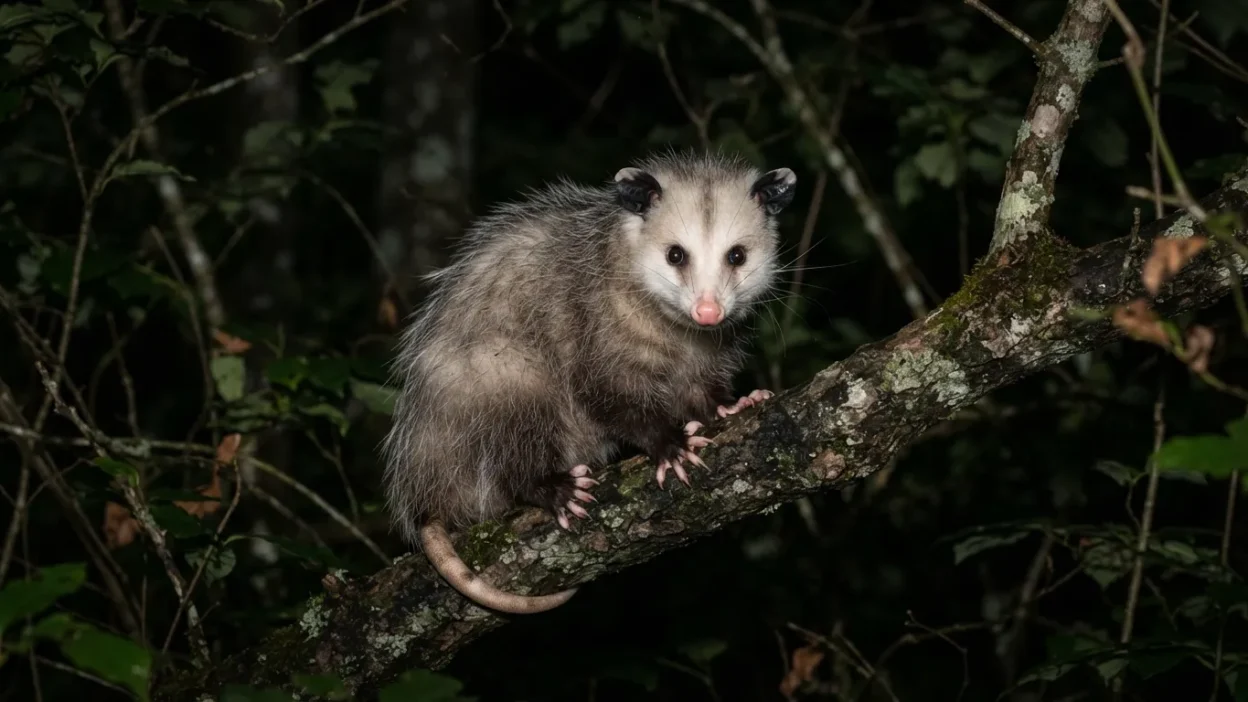
Ever spotted a strange, ghostly-looking creature waddling through your backyard at night? That was probably a possum, and it’s more helpful than you think.
Possums often get a bad reputation. People call them ugly, scary, or even dangerous. But here’s the truth: they’re one of the most misunderstood animals in America.
This gentle creature is actually a natural pest controller. It eats ticks, roaches, and rotting food. It rarely bites. And it almost never carries rabies.
In this guide, you’ll learn everything about possums. We’ll cover their biology, diet, behavior, and myths. By the end, you’ll see this small marsupial in a whole new light.
Let’s dig in.
What Exactly Is a Possum?
A possum is North America’s only marsupial. That means it carries its babies in a pouch, just like a kangaroo.
The correct name is actually “opossum.” But most Americans just say “possum” for short. Both words refer to the same animal.
The scientific name is Didelphis virginiana. Scientists also call it the Virginia opossum. This species lives across most of the United States.
Possums have been around for a long time. In fact, they’re one of the oldest surviving mammal species on Earth. Some experts say they’ve barely changed in millions of years.
What Does a Possum Look Like?
Possums have a distinct appearance. Once you learn their features, you’ll never mistake them for anything else.
Here’s what makes them unique:
- Size: About the size of a house cat
- Fur: Grayish-white, coarse, and shaggy
- Face: Pointed snout with a pink nose
- Ears: Thin, black, and hairless
- Tail: Long, pink, and scaly (like a rat’s tail)
- Feet: Have an opposable “thumb” for gripping branches
Their tail is prehensile. This means they can use it to grip tree branches. Young possums even hang from branches using their tails.
Adult possums weigh between 4 and 14 pounds. Males are usually larger than females.
Where Do Possums Live?
Possums are incredibly adaptable. You’ll find them in almost every US state, from busy cities to quiet farmlands.
They prefer areas near water, like streams, marshes, and woodlands. But they also thrive in suburban neighborhoods.
Common possum habitats include:
- Wooded areas with tree cover
- Barns, sheds, and crawl spaces
- Storm drains and abandoned burrows
- Backyards with easy food access
Possums don’t dig their own dens. Instead, they use abandoned burrows, hollow logs, or piles of brush. They’re resourceful when it comes to finding shelter.
What Do Possums Eat?
This is where possums really shine. Their diet makes them one of nature’s best cleanup crews.
Possums are omnivores. This means they eat both plants and animals. Their menu is surprisingly diverse.
Animal-based foods:
- Insects like ticks, beetles, and roaches
- Small rodents and snakes
- Slugs, snails, and worms
- Dead animals (carrion)
Plant-based foods:
- Fruits and berries
- Nuts and seeds
- Grasses and leaves
Here’s an amazing fact: a single possum can eat up to 5,000 ticks in one season. That’s a huge win for anyone worried about Lyme disease.
They also clean up carrion that other animals leave behind. This helps stop the spread of disease in local ecosystems.
Possum Behavior: Nocturnal and Solitary
Possums are night owls. They sleep during the day and become active after dark.
This nocturnal habit helps them avoid predators. It also means most people never actually see one awake.
Possums are solitary animals too. They don’t live in groups or families like some other mammals. Adults come together only to mate.
They’re also slow-moving. Unlike raccoons or foxes, possums don’t run fast. This makes them an easy target for cars and predators.
Why Do Possums “Play Dead”?
You’ve probably heard the phrase “playing possum.” This behavior is one of nature’s strangest defense mechanisms.
When a possum feels threatened, it doesn’t fight. Instead, it falls over, stiffens up, and appears completely lifeless.
This isn’t a choice the possum makes. It’s an involuntary response, similar to fainting. Their body releases a foul-smelling fluid too, which mimics the smell of a rotting carcass.
Predators usually lose interest in “dead” prey. This clever trick can last from a few minutes to several hours.
Once the danger passes, the possum simply gets up and walks away like nothing happened.
Are Possums Dangerous?
Short answer: not really. Possums look intimidating, but they’re mostly harmless to humans and pets.
Let’s break down the common concerns.
Do possums bite? Rarely. Possums prefer to hiss, show their teeth, or play dead rather than attack. Bites usually only happen if a possum feels cornered.
Do possums carry rabies? Almost never. A possum’s body temperature is too low to support the rabies virus. This makes them far safer than raccoons or bats.
Are they aggressive toward pets? Not typically. Possums avoid confrontation whenever possible. Most encounters with dogs or cats end with the possum freezing or fleeing.
Do they carry diseases? Like any wild animal, they can carry parasites. But their risk to humans is much lower than commonly believed.
Possums vs. Rats: What’s the Difference?
Many people confuse possums with giant rats. But these animals are completely different.
| Feature | Possum | Rat |
| Animal type | Marsupial | Rodent |
| Size | Cat-sized | Much smaller |
| Tail | Prehensile, gripping | Balance only |
| Teeth | 50 teeth (most of any land mammal) | Fewer teeth |
| Lifespan | 2–4 years | 1–2 years |
| Reproduction | Pouch-raised babies | Nest-raised babies |
Possums actually have more teeth than any other North American land mammal. That’s 50 teeth in total.
The Life Cycle of a Possum
Possum reproduction is fascinating and unlike most mammals in the US.
Females carry their babies in a pouch, similar to kangaroos. A litter can include up to 20 babies, though only a few usually survive.
Newborn possums are tiny, about the size of a honeybee. They crawl into the mother’s pouch immediately after birth.
After about two months, the babies leave the pouch. They then ride on their mother’s back as she forages for food.
Possums grow up fast. They become independent within a few months and are ready to reproduce within a year.
Their lifespan is short compared to other mammals. Most possums live only two to four years in the wild.
Are Possums Good for Your Garden and Yard?
Yes, absolutely. Despite their reputation, possums are actually great to have around.
Here’s why homeowners should welcome them:
- Natural pest control They eat ticks, slugs, and insects that damage gardens.
- Snake deterrent Possums are known to eat venomous snakes.
- Clean-up crew They remove fallen fruit and small carrion.
- Low risk They rarely damage property or attack pets.
Instead of viewing possums as pests, many wildlife experts recommend letting them stay. They do more good than harm.
How to Safely Handle a Possum in Your Yard
Sometimes a possum ends up somewhere inconvenient, like a garage or shed. Here’s how to handle it calmly.
Do:
- Leave a clear exit path for it to leave on its own
- Keep pets indoors until it’s gone
- Remove accessible food sources like pet food or trash
Don’t:
- Try to touch or corner the animal
- Use poison or harmful traps
- Assume it’s sick just because it’s slow
Most possums leave on their own within a night or two. They rarely stay long once they realize an area isn’t a good food source.
If a possum seems injured or is stuck, contact a local wildlife rehabilitation center for safe removal.
Common Possum Myths, Debunked
There’s a lot of misinformation about possums. Let’s clear up the biggest myths.
Myth 1: Possums are aggressive. False. They’re shy and avoid conflict whenever they can.
Myth 2: They always carry rabies. False. Their low body temperature makes rabies extremely rare.
Myth 3: They’re just big rats. False. Possums are marsupials, not rodents.
Myth 4: They attack pets often. False. Most encounters end peacefully, with the possum retreating.
Myth 5: They’re dirty animals. False. Possums groom themselves constantly, much like cats.
Fun Facts About Possums
Here are a few interesting facts to share with friends and family.
- Possums have been on Earth for over 70 million years.
- They’re immune to most snake venom.
- Their prehensile tail can support their body weight for short periods.
- Possums have excellent memories for finding food sources.
- Female possums are called “jills,” and males are called “jacks.”
FAQs:
1. Are possums and opossums the same animal? Yes. “Possum” is simply the shortened, common nickname for “opossum” used across the United States.
2. How long do possums live in the wild? Most possums live between two and four years, though some in captivity live slightly longer.
3. Do possums hibernate in winter? No. Possums don’t hibernate. They stay active year-round but may rest more during extreme cold.
4. What sounds do possums make? Possums hiss, growl, or click their teeth when threatened. They’re usually silent otherwise.
5. Can possums climb trees? Yes. Their prehensile tail and gripping feet make them skilled climbers.
6. Do possums eat cat or dog food? Yes, they will eat pet food left outside. Removing it can help discourage visits.
7. Is it legal to relocate a possum? This depends on your state. Many states require licensed wildlife handlers for relocation, so check local regulations first.
Final Thoughts
Possums aren’t the scary creatures people often assume. They’re gentle, shy, and surprisingly helpful around the home.
From eating ticks to cleaning up carrion, they quietly support a healthier backyard ecosystem. Rabies risk is low, aggression is rare, and their presence usually means fewer pests nearby.
Next time you spot one, give it space and let it do its job. Understanding possums helps us coexist peacefully with one of nature’s most underrated animals.

I’m Jessica Morgan, a writer who loves covering lifestyle, entertainment, sports, trends, and everyday topics in a simple and engaging way. At PrayersVibe.com, I focus on creating helpful, easy-to-read content that informs and connects with readers. I enjoy researching new ideas and turning them into clear, useful stories that readers can enjoy.