
Picture a table lit by candles. Wine glasses are full. A plate of symbols waiting to tell a 3,000-year-old story. That’s the heart of Passover.
If you searched “Passover 2025,” you probably want one thing first: the dates. So let’s start there, then walk through everything else: the history, the food, the customs, and the meaning behind it all.
Passover 2025 began at sundown on Saturday, April 12, and ended on the evening of Sunday, April 20. For eight days, Jewish families across the United States gathered around Seder tables, retold an ancient story, and passed traditions down to the next generation.
If you’re Jewish and want a refresher, or you’re attending your first Seder as a guest, this guide covers every corner of Passover 2025.
Passover 2025: Key Dates at a Glance
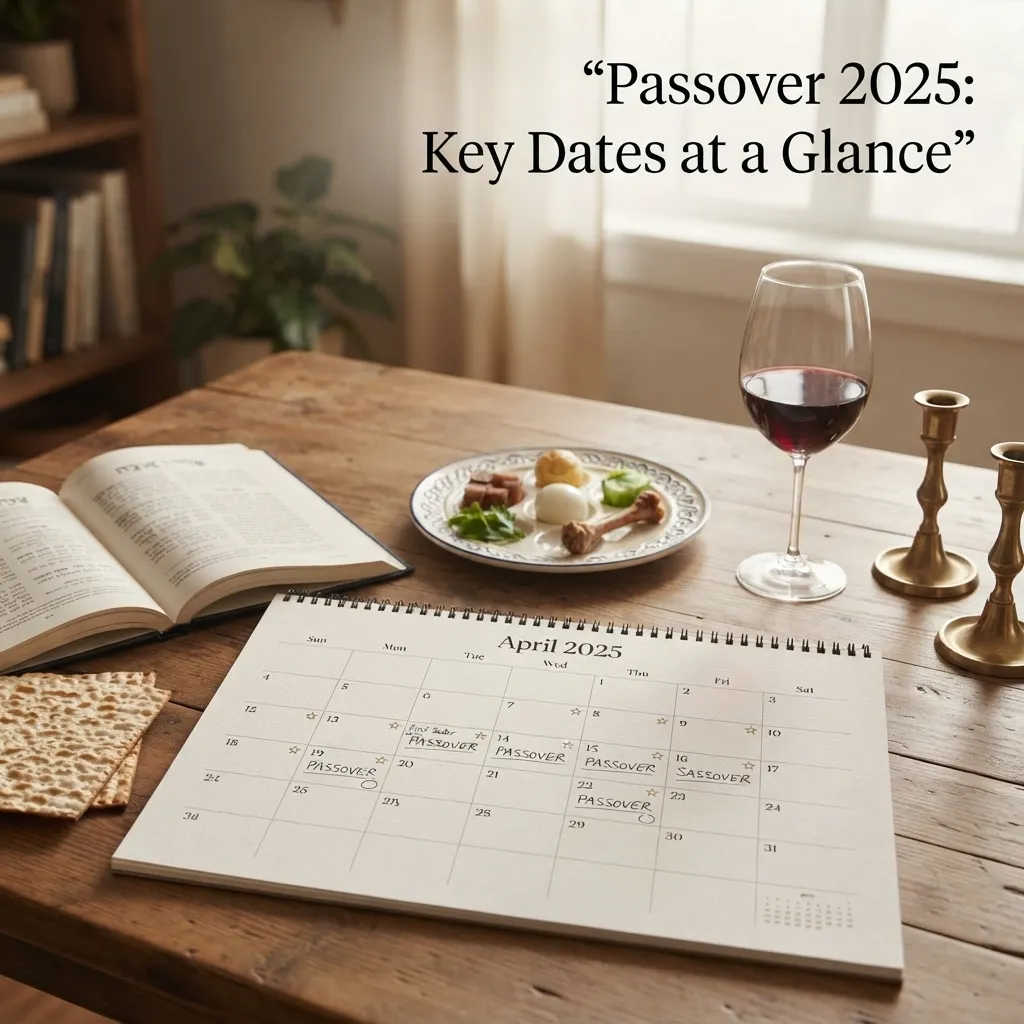
Here’s the full breakdown of Passover 2025:
- Passover begins: Sundown, Saturday, April 12, 2025
- First Seder: Saturday night, April 12, 2025
- Second Seder: Sunday night, April 13, 2025
- Passover ends: Nightfall, Sunday, April 20, 2025
- Hebrew dates: 15–22 Nisan, 5785
In Israel, and in many Reform Jewish communities, Passover runs for seven days instead of eight. That means the holiday wrapped up a day earlier for those groups, on the evening of April 19, 2025.
These dates matter for more than just planning a meal. Many observant Jews avoid work, school, and travel during the first two and last two days of the holiday. That’s why schools and workplaces across the U.S. often note Passover dates on religious accommodation calendars.
What Is Passover, Exactly?
Passover, or Pesach in Hebrew, is one of the most important holidays on the Jewish calendar. It celebrates freedom. Specifically, it marks the moment the Israelites walked out of slavery in ancient Egypt.
The name “Passover” comes from a striking detail in the story. When a final plague struck Egypt, it “passed over” the homes of the Israelites, sparing their firstborn children. That single moment gave the holiday its name.
Today, Passover is part history lesson, part family reunion, and part spiritual reflection. It’s warm. It’s loud. It’s full of questions, songs, and second helpings.
The Story Behind Passover: The Exodus
The story comes from the Book of Exodus. According to the Torah, the Israelites were enslaved in Egypt for generations. Their suffering was severe. Eventually, God chose Moses to demand their freedom.
Moses approached Pharaoh with a simple request: let his people go. Pharaoh refused, again and again. So ten plagues struck Egypt, each one more devastating than the last.
The final plague was the death of every firstborn son in Egypt. To protect their own children, Israelite families marked their doorposts with lamb’s blood. When the plague swept through, it passed over those homes.
After that night, Pharaoh finally relented. The Israelites left in such a hurry that their bread didn’t have time to rise. That’s the origin of matzah, the flat, unleavened bread eaten throughout Passover.
This story isn’t just remembered. It’s re-lived every year at the Seder table.
What Happens at a Passover Seder
The Seder is the centerpiece of Passover. It’s a ritual meal, but it’s also a structured retelling of the Exodus story, guided by a book called the Haggadah.
Most families in the U.S. hold two Seders one on the first night and one on the second. Here’s what typically happens at the table:
- The Seder plate. A special plate holds symbolic foods: a roasted bone, a bitter herb, a sweet paste called charoset, parsley, and a hard-boiled egg. Each item represents a piece of the story.
- Four cups of wine. Guests drink four cups throughout the night, each tied to a promise of freedom.
- The Four Questions. Traditionally asked by the youngest child at the table, starting with “Why is this night different from all other nights?”
- The afikoman. A piece of matzah is hidden for children to find later in the evening, often traded for a small prize.
- Songs and readings. Families sing traditional songs and read passages from the Haggadah together.
No two Seders look exactly alike. Some last twenty minutes. Others stretch past midnight with debate, laughter, and multiple courses of food.
How Passover Dates Are Calculated Each Year
If you’ve ever wondered why Passover lands on a different date every year, the answer lies in the Hebrew calendar.
Unlike the standard calendar most of us use daily, the Hebrew calendar is lunar-based, with adjustments to keep it aligned with the seasons. Passover always falls on the 15th day of the Hebrew month of Nisan. But since Nisan shifts on the secular calendar, so does Passover.
That’s why Passover 2025 landed in mid-April, while Passover 2026 falls closer to the start of April, and Passover 2027 pushes into late April. The holiday always arrives in early spring, tied to the barley harvest in ancient Israel, but the exact week moves year to year.
Passover Foods: What’s on the Table (and What Isn’t)
Food carries deep meaning during Passover. The core rule is simple: no chametz. That means no leavened bread or anything made with wheat, barley, rye, oats, or spelt that’s been allowed to rise.
Instead, matzah takes center stage. It’s plain, crunchy, and shows up in more forms than you’d expect matzah ball soup, matzah brei, even matzah lasagna in some households.
Common Passover dishes across American Jewish homes include:
- Matzah ball soup
- Brisket or roasted chicken
- Charoset (a sweet mix of apples, nuts, and wine)
- Gefilte fish
- Roasted vegetables
- Flourless chocolate cake for dessert
Many families spend the days before Passover clearing their kitchens of chametz entirely, swapping in Passover-certified products for the week.
How to Prepare for a Passover Seder
If you’re hosting or attending your first Seder, a little preparation goes a long way.
If you’re hosting:
- Order or prepare a Haggadah for every guest
- Shop early Passover foods sell out fast in the days before the holiday
- Set the Seder plate the morning of, so nothing’s missed
- Clear the house of chametz beforehand
If you’re a guest:
- Ask your host if you should bring anything (often, they’ll say no let them host)
- Come hungry, but pace yourself; there are multiple courses
- Don’t worry about knowing every song or prayer most Seders welcome questions
- Dress comfortably but a little dressed up; it’s a special occasion
Passover is forgiving of mistakes. What matters most is showing up and being present.
Passover Greetings: What to Say
If you’re attending a Seder or know someone celebrating, a simple greeting goes a long way. The most common phrase is “Chag Sameach,” meaning “happy holiday.”
You’ll also hear “Chag Kasher v’Sameach,” which adds a wish for a holiday that’s both joyful and properly kosher.
In English, “Happy Passover” works just fine too.
Passover in the USA: What to Expect
Passover isn’t a federal holiday, but its impact is felt widely across American life. Schools, universities, and employers often list Passover on religious accommodation calendars, and many workplaces allow time off for the first two and last two days of the holiday.
Grocery stores in areas with larger Jewish communities stock Passover sections weeks in advance, filled with matzah, kosher-for-Passover products, and Seder plate ingredients.
Community organizations, synagogues, and even some universities host public Seders for students and community members who might otherwise spend the holiday alone.
If you live in a city with a significant Jewish population New York, Los Angeles, Chicago, Miami, or Boston, for example you’ll likely notice Passover’s presence in local news, community events, and even restaurant menus offering Passover-friendly dishes.
Passover 2025 vs. Future Passover Dates
Since Passover shifts each year, it helps to see the bigger picture. Here’s a quick look ahead:
- Passover 2025: April 12–20
- Passover 2026: April 1–9
- Passover 2027: April 21–29
- Passover 2028: April 10–18
Knowing these dates in advance helps with travel planning, school schedules, and family gatherings, especially if relatives are flying in from out of town.
Common Mistakes to Avoid During Passover
Even longtime celebrants slip up sometimes. Here are a few common ones:
- Forgetting to check labels. Some everyday products contain hidden chametz. Passover-certified packaging makes this easier to avoid.
- Underestimating the Seder’s length. First-timers sometimes plan a short evening, only to find the Seder naturally runs longer.
- Skipping questions. The Seder is meant to be interactive. Asking questions is part of the tradition, not an interruption.
- Overpacking the menu. With so many symbolic foods already involved, simpler main courses often work better than elaborate ones.
FAQs:
Q1. When exactly did Passover 2025 start and end?
Passover 2025 began at sundown on Saturday, April 12, and ended at nightfall on Sunday, April 20.
Q2. Why is Passover called “Pesach” in Hebrew?
“Pesach” means “to pass over,” referencing the moment the final plague spared Israelite homes in Egypt.
Q3. How long does Passover last?
Passover lasts eight days outside of Israel and seven days within Israel and in many Reform communities.
Q4. What foods are forbidden during Passover?
Any leavened grain product, called chametz, is avoided. This includes most bread, pasta, and baked goods made with wheat, barley, rye, oats, or spelt.
Q5. Do you have to be Jewish to attend a Seder?
Not at all. Many families welcome friends, neighbors, and coworkers of any background to join their Seder table.
Q6. What is the significance of the four cups of wine?
Each cup represents a different promise of freedom made to the Israelites, drawn from language in the Book of Exodus.
Q7. Why does Passover fall on a different date each year?
Passover follows the Hebrew lunar calendar, always landing on the 15th of Nisan, which shifts each year relative to the standard calendar.
Final Thoughts:
Passover 2025 may have come and gone, but its story doesn’t expire. Every spring, families gather, retell an ancient journey from slavery to freedom, and pass that memory to the next generation.
If you attended a Seder this year or you’re planning ahead for the next one, Passover remains a holiday built on resilience, gratitude, and togetherness.
Understanding its dates, traditions, and meaning helps anyone Jewish or not appreciate why this holiday still matters, thousands of years later.

I’m Michael Carter, a writer passionate about education, general information, language, and the meaning behind words and phrases. At PrayersVibe.com, I create clear and useful content that helps readers understand topics without complicated language. I enjoy researching different subjects and sharing accurate information in a simple, reader-friendly way.