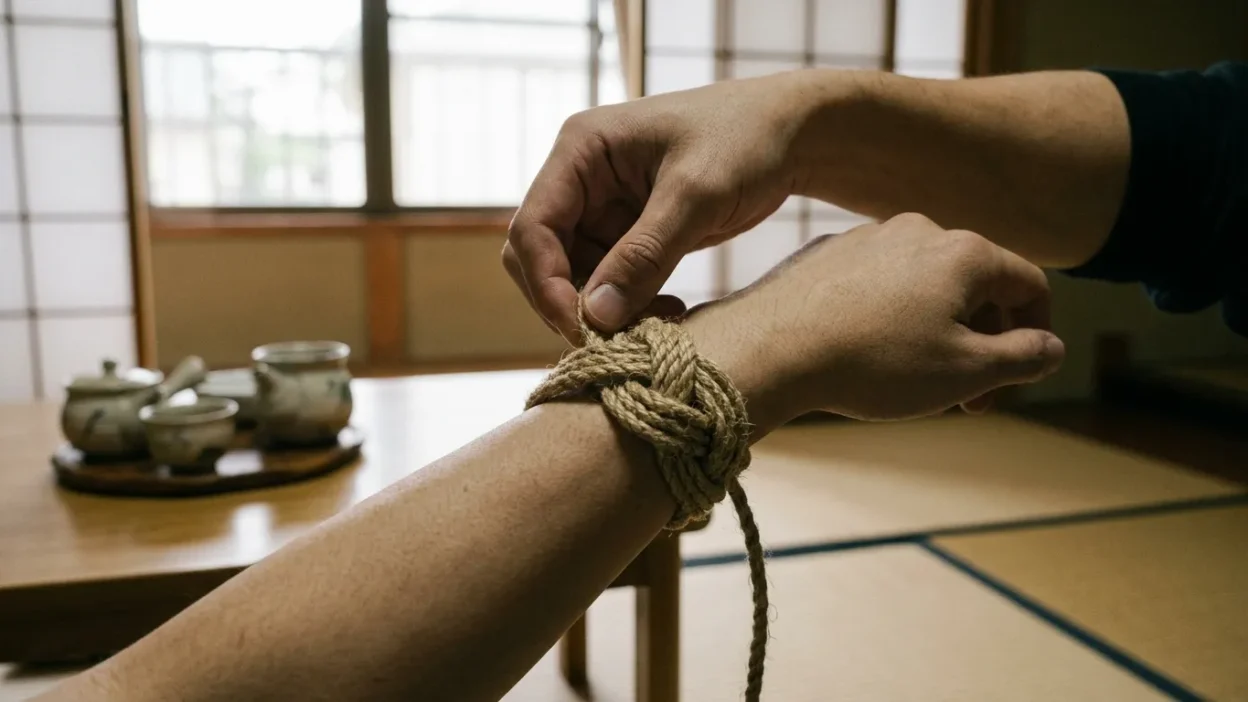
If you have seen the word shibari online, you may wonder what it really means. Is it simply another word for rope bondage, or does it describe a special Japanese art?
The short answer is simple: shibari meaning is tied to the Japanese idea of binding or tying. In modern English, however, the word usually refers to Japanese-style rope bondage that combines rope, body shapes, patterns, restraint, and artistic expression.
The term can cover both artistic and adult BDSM settings. Not every person uses the word in exactly the same way, and shibari and kinbaku often overlap in modern use.
This guide explains the shibari meaning, its history, the difference between shibari and kinbaku, why people practice it, and the most important safety and consent points.
Quick Answer
Shibari (縛り) is a Japanese word connected with tying or binding. In modern Western usage, it commonly describes Japanese-style rope bondage, where rope forms deliberate patterns around the body. The practice can have an artistic, emotional, or erotic role, depending on the people involved.
One important point is that shibari does not have one fixed meaning in every community. Some people use it as a broad term for Japanese rope work, while others use kinbaku for erotic or intimate rope bondage.
Definition & Meaning
The Japanese word shibari comes from 縛り and broadly relates to binding, tying, or fastening. In ordinary Japanese, it is not limited to sexual activity.
The modern English use is more specific. It often describes a form of rope bondage influenced by Japanese traditions, with attention given to the lines, patterns, body shape, and experience of the person being tied.
This difference matters because a dictionary translation does not tell the whole story. When someone searches for “shibari meaning,” they may actually want to know what the word means within modern rope culture.
In that setting, shibari can involve:
- Rope arranged in deliberate patterns
- A strong focus on visual form
- Restriction of movement
- Trust and communication between participants
- Artistic or performance elements
- Intimate or erotic elements in adult settings
So, in simple terms, shibari meaning changes with context. The literal Japanese meaning is about tying or binding, while the modern international meaning often points to Japanese-style rope bondage.
Shibari Meaning in Japanese
The literal meaning is important because it shows that shibari was not created as an English BDSM word.
In Japanese, 縛り can describe binding or tying. The word itself does not automatically mean sex. Its meaning depends on how someone uses it.
Modern Western rope communities adopted shibari as a name for a Japanese-inspired form of rope bondage. Sources on the subject note that the word became especially common in Western discussions during the 1990s.
That is why you may see the word used in different ways. A person discussing Japanese rope art may use “shibari,” while another person may use “kinbaku.”
What Is Shibari Used For?
Shibari can serve different purposes. It is not accurate to assume that every practice has the same goal.
For some adults, it forms part of consensual BDSM or intimate play. For others, rope work has a strong artistic or performance focus. Some communities also describe it as a practice involving concentration, body awareness, trust, and connection.
The visual side is also important. Instead of treating rope only as a tool for restraint, shibari often treats the rope lines as part of the overall design.
This can make the practice look closer to body art or performance art than simple restraint.
Shibari vs. Kinbaku
People often ask whether shibari and kinbaku mean the same thing. The answer depends on the community.
Kinbaku (緊縛) is commonly translated as “tight binding.” In discussions of Japanese rope bondage, it often has a stronger connection to erotic or intimate binding.
Shibari, on the other hand, has the broader literal sense of tying or binding.
Still, there is no single distinction accepted by everyone. Some teachers and practitioners use the two terms almost interchangeably. Others draw a line between them based on purpose, style, or emotional tone.
| Term | Common meaning | Main point |
| Shibari | Tying or binding; often Japanese-style rope bondage | Broad and widely used term |
| Kinbaku | Tight binding; often Japanese erotic rope bondage | May suggest a more intimate context |
| Rope bondage | Restraining someone with rope | Broad English term |
| Hojojutsu | Historical Japanese rope restraint art | Has a martial and historical context |
The safest approach is to look at how the speaker defines the term rather than assuming every practitioner uses the words in the same way.
Shibari and Japanese History
The history of modern shibari is complex. You may see simple claims that it directly came from hojojutsu, a Japanese method of using rope to restrain people. There is a historical connection often discussed between Japanese rope restraint and later rope bondage, but scholars also note that the exact history and lineage are more complicated than a simple straight line.
Hojojutsu developed as a martial restraint practice. It had practical purposes and should not be treated as identical to modern consensual rope bondage.
Over time, rope binding also appeared in Japanese theater, visual culture, and erotic imagery. Modern kinbaku developed through several influences rather than one single historical event.
This distinction is important. Modern shibari should not be described as simply “ancient BDSM.” Its history includes practical restraint, art, performance, erotic culture, and modern international BDSM communities.
How Shibari Differs From Simple Rope Bondage
Rope bondage is a broad category. It can mean any consensual use of rope to restrict movement.
Shibari usually adds another layer: form and visual design.
The rope may follow the body’s shape and create repeated lines or geometric patterns. The person tying may also focus on rhythm, tension, composition, and the overall experience.
That does not mean every shibari session must look elaborate. Different schools and practitioners have different approaches.
The key difference is often intent. Simple bondage may focus mainly on restraint. Shibari often gives equal attention to the way the rope looks and feels.
Why Do Adults Practice Shibari?
People have different reasons for exploring rope bondage. There is no single motivation that applies to everyone.
Some adults are interested in the artistic side. They enjoy learning patterns and creating visual designs.
Others value the interpersonal side. A rope session can require close communication, trust, patience, and attention to another person’s physical and emotional responses.
For some people, it is also part of consensual BDSM or erotic activity.
The important point is that the meaning comes from the participants and the setting. A photograph of shibari does not tell you why the people involved chose to practice it.
Consent Is a Core Part of Shibari
Consent should come before the rope.
Because rope can restrict movement and create physical risks, both people need to understand what they are agreeing to before starting.
A healthy approach includes clear discussion about:
- What activities are wanted
- What activities are not wanted
- How either person can stop
- What signals will be used if speaking becomes difficult
- Any physical limits
- How the session will end
- What support or aftercare may be wanted afterward
Consent should also remain active during the session. Someone can change their mind at any time.
A previous “yes” does not mean permanent permission.
Shibari Safety Basics
Shibari can carry real physical risks. Tight rope can affect nerves, blood flow, skin, or movement. Suspension adds greater risk because the person’s body is no longer simply resting on the floor or another stable surface.
For that reason, beginners should treat rope bondage as a skill that requires proper education rather than something to learn from a single attractive photograph or short social media video.
Do not assume that a beautiful pattern is automatically safe.
A useful beginner mindset is:
Learn first. Practice carefully. Communicate often. Never rush into advanced techniques.
Suspension is especially unsuitable for casual experimentation. It requires knowledge of body mechanics, equipment, rigging, and emergency procedures.
Common Shibari Mistakes vs. Better Practice
| Common mistake | Better approach |
| Treating a picture as a safety lesson | Learn from qualified, safety-focused instruction |
| Assuming rope is harmless | Understand possible nerve, circulation, and skin risks |
| Skipping consent talks | Agree on boundaries before starting |
| Copying advanced ties immediately | Build skills gradually |
| Ignoring discomfort | Stop and check what is happening |
| Treating suspension like basic tying | Learn specialized suspension safety first |
| Focusing only on appearance | Put safety and communication first |
The biggest lesson is simple: appearance should never come before safety.
What Beginners Should Understand First
If you are researching shibari for the first time, you do not need to learn complex patterns right away.
Start by learning the vocabulary and the basic principles behind safe rope practice.
Understand the difference between:
- The person tying the rope
- The person being tied
- Decorative rope work
- Restrictive rope work
- Ground-based rope work
- Suspension
- Consent and negotiation
- Safety monitoring
It also helps to learn from instructors who openly discuss risks instead of presenting rope bondage as risk-free.
A good teacher should be willing to explain why a technique works and what can go wrong.
Quick Shibari Reference Checklist
| Topic | What to remember |
| Meaning | Shibari broadly relates to tying or binding |
| Modern use | Often means Japanese-style rope bondage |
| Related term | Kinbaku is often used for Japanese erotic rope bondage |
| Broader category | Rope bondage includes many styles |
| History | Modern practice has several historical and cultural influences |
| Consent | Discuss boundaries before beginning |
| Safety | Rope can cause physical harm if used poorly |
| Beginners | Learn basic skills before advanced work |
| Suspension | Treat it as an advanced, higher-risk area |
| Terminology | Different communities may define terms differently |
Is Shibari Always Sexual?
No.
Shibari is often associated with adult BDSM, but the word itself does not automatically mean sexual activity. Modern practitioners may approach rope as art, performance, body expression, or intimate adult practice.
Context matters.
For example, a performance may focus on the visual relationship between rope and body. An adult couple may explore it as part of consensual intimacy. A photographer may be interested in the visual composition.
These uses can look similar while having very different purposes.
Is Shibari the Same as BDSM?
Not exactly.
BDSM is a broad term that covers many consensual practices involving areas such as bondage, discipline, dominance, submission, and related dynamics.
Shibari can be one form of bondage within BDSM, but not every use of shibari needs to include every part of BDSM.
Similarly, someone can practice rope bondage without identifying with the broader BDSM label.
This is another reason why context matters when you see the word online.
What Makes Shibari an Art Form?
The artistic element comes from the intentional use of rope, shape, space, and the human form.
A practitioner may think about how lines cross the body, how patterns repeat, and how the final arrangement looks from different angles.
Performance can add another layer. The process itself can become part of the artwork.
However, calling shibari an art form does not remove the need for safety. Artistic goals should never justify unsafe rope placement or unnecessary physical risk.
FAQs:
1. What does shibari mean in Japanese?
Shibari (縛り) broadly relates to binding or tying in Japanese. In modern international use, it commonly refers to Japanese-style rope bondage. The exact meaning depends on context.
2. Is shibari the same as Japanese rope bondage?
In modern English usage, the terms are often used for the same general practice. Shibari commonly describes Japanese-style rope bondage, especially when it includes deliberate patterns and an artistic focus.
3. What is the difference between shibari and kinbaku?
Shibari has the broader literal meaning of tying or binding. Kinbaku means tight binding and is often linked more closely with erotic Japanese rope bondage. However, many practitioners use the terms interchangeably.
4. Is shibari always sexual?
No. Shibari can appear in artistic, performance, educational, and adult contexts. When adults use it sexually, it usually falls within consensual BDSM or rope-play settings.
5. Where did shibari come from?
Its modern history has connections to Japanese rope restraint traditions, including hojojutsu, as well as theater, visual culture, and later erotic practices. Scholars caution against reducing its history to one simple origin story.
6. Is shibari safe for beginners?
Rope bondage can cause injuries when practiced without proper knowledge. Beginners should learn basic safety and consent practices before attempting advanced techniques, and suspension requires much more specialized knowledge than simple ground-based rope work.
7. Why is shibari popular?
People may be drawn to its visual beauty, craftsmanship, sense of connection, concentration, intimacy, or role within consensual BDSM. Different practitioners have different reasons, so there is no single explanation for its appeal.
Conclusion:
Understanding the shibari meaning starts with a simple idea: the Japanese word relates to tying or binding. In modern international use, it usually describes Japanese-style rope bondage that combines restraint with patterns, body lines, and artistic expression.
Kinbaku is a closely related term, although different communities use the two words in different ways.
The history is also more complex than a simple “ancient bondage” story. Japanese restraint traditions, theater, visual culture, erotic art, and modern BDSM all play roles in the wider story.
If you explore the subject further, focus on consent, communication, education, and safety before technique or appearance. That foundation makes the subject much easier to understand and approach responsibly.

I am Ernest Angelou, the heart and voice behind prayersvibe.com.
I am someone who believes that prayers are not just words, but a deep conversation between the soul and God.
I am here to share faith-filled prayers that bring peace, hope, and divine comfort into everyday life.