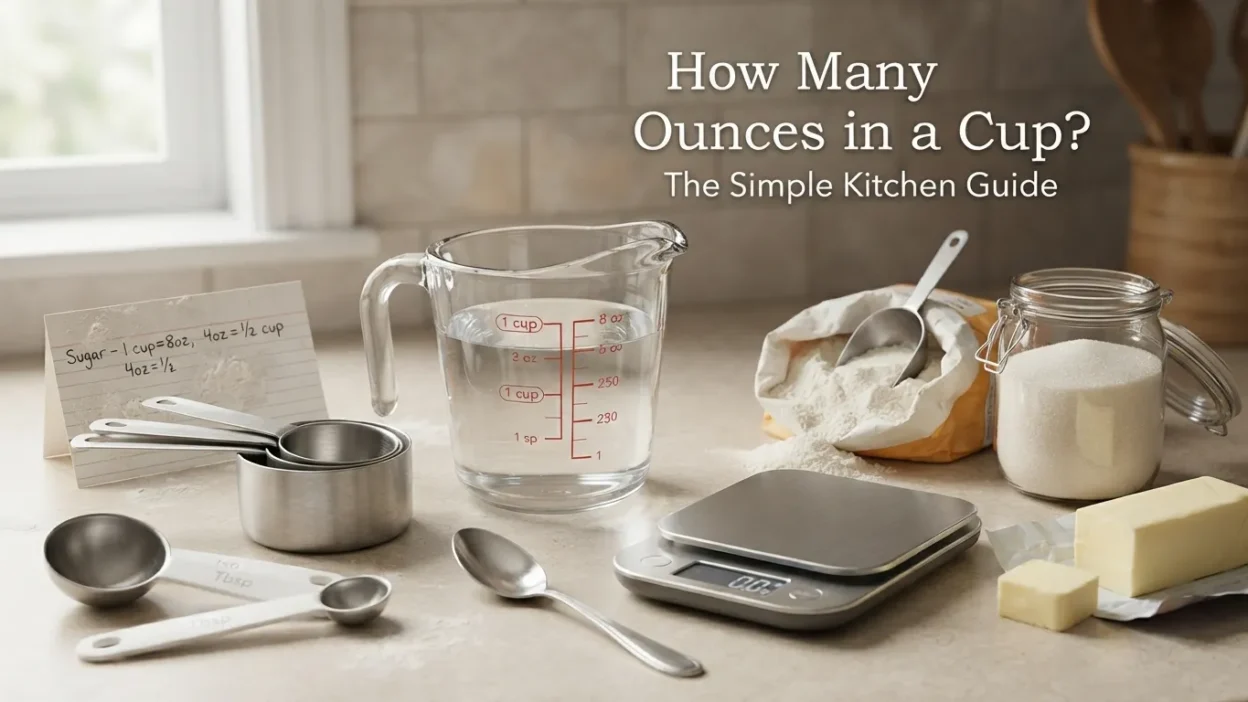
Ever stood in your kitchen, recipe in one hand, measuring cup in the other, wondering if you’re doing it right? You’re not alone.
Cup and ounce conversions trip up even seasoned home cooks. One recipe says “cups.” Another says “ounces.” And suddenly, your pancakes taste like hockey pucks.
Here’s the good news. Once you know the simple math, you’ll never second-guess a recipe again.
In this guide, we’ll break down exactly how many ounces are in a cup. We’ll cover liquid and dry measurements. We’ll also share a full conversion chart, common mistakes, and answers to your biggest questions.
Grab your measuring cups. Let’s make cooking easier.
Quick Answer: How Many Ounces Are in a Cup?
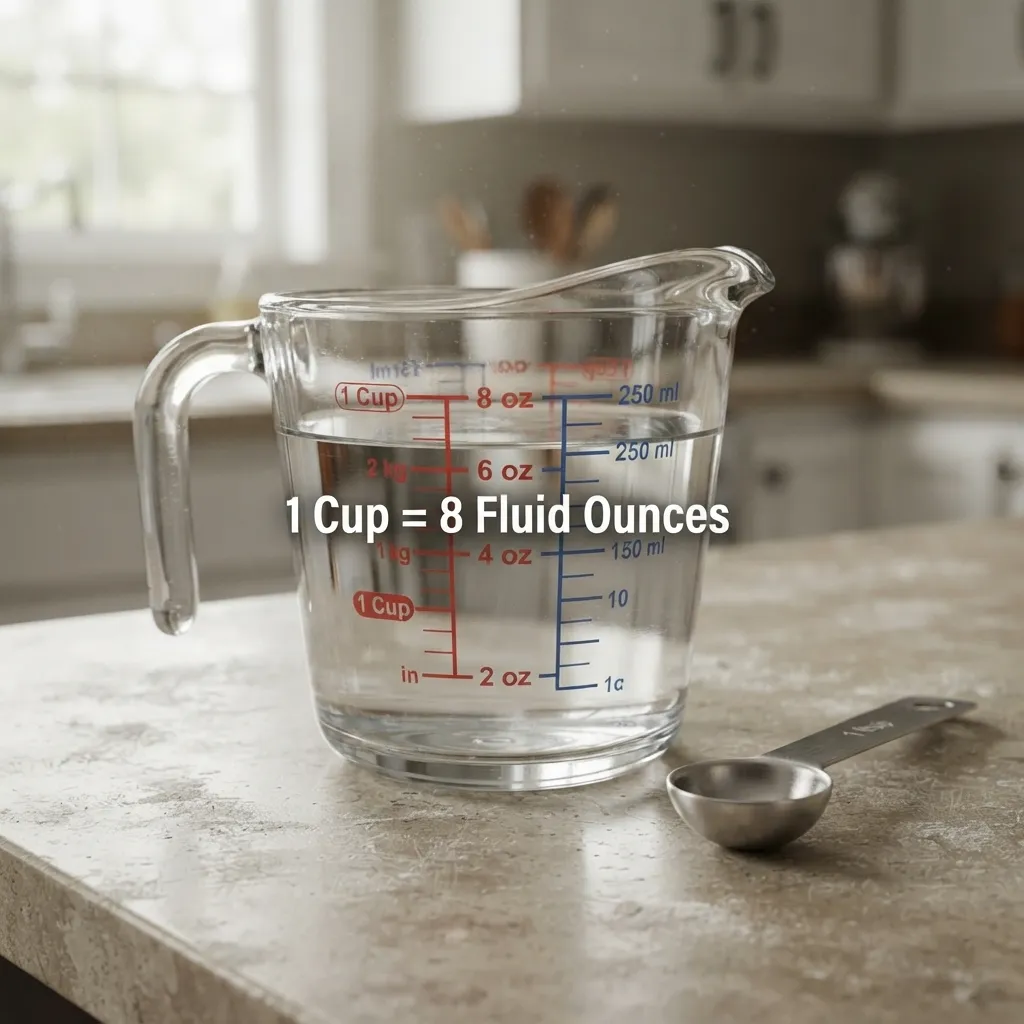
There are 8 fluid ounces in 1 US cup.
This is the number most American recipes use. It applies to liquids like water, milk, and oil.
Here’s a simple breakdown:
| Cup Measurement | Fluid Ounces |
| 1 cup | 8 fl oz |
| 1/2 cup | 4 fl oz |
| 1/4 cup | 2 fl oz |
| 1/3 cup | 2.7 fl oz |
| 3/4 cup | 6 fl oz |
| 2 cups | 16 fl oz |
Simple, right? But there’s a small catch. Ounces measure two different things: volume and weight. Let’s clear that up next.
Understanding Cups and Ounces
A cup measures volume. It tells you how much space an ingredient takes up.
An ounce can measure two things. It can measure volume (fluid ounces) or weight (dry ounces).
This is where confusion starts. A fluid ounce of water is not the same as a dry ounce of flour.
Water is simple. 8 fluid ounces always equals 1 cup.
Flour is different. It’s light and fluffy. So 1 cup of flour weighs less than 8 dry ounces.
That one detail changes everything in baking. Let’s dig deeper.
Fluid Ounces vs. Dry Ounces: Why It Matters
This is the most important thing to understand.
Fluid ounces measure liquid volume. Think water, milk, juice, and oil. For these, 1 cup always equals 8 fluid ounces. No exceptions.
Dry ounces measure weight. Think flour, sugar, and shredded cheese. For these, the ounce-to-cup ratio changes based on the ingredient.
Here’s why. A cup of feathers weighs far less than a cup of rocks. Same volume, different weight.
Flour works the same way. It’s light and airy. So 1 cup of all-purpose flour weighs about 4.25 ounces, not 8.
This is why baking recipes often ask you to weigh dry ingredients instead of scooping them. It gives you a more accurate result every time.
Standard Cup to Ounce Conversion Chart (Liquids)
Use this chart anytime you’re measuring liquids like water, milk, or broth.
| Cups | Fluid Ounces | Tablespoons |
| 1/8 cup | 1 fl oz | 2 tbsp |
| 1/4 cup | 2 fl oz | 4 tbsp |
| 1/3 cup | 2.7 fl oz | 5.3 tbsp |
| 1/2 cup | 4 fl oz | 8 tbsp |
| 2/3 cup | 5.3 fl oz | 10.7 tbsp |
| 3/4 cup | 6 fl oz | 12 tbsp |
| 1 cup | 8 fl oz | 16 tbsp |
| 1.5 cups | 12 fl oz | 24 tbsp |
| 2 cups | 16 fl oz | 32 tbsp |
| 4 cups | 32 fl oz | 64 tbsp |
Pin this chart or screenshot it. You’ll use it more than you think.
Cup to Ounce Conversions for Common Dry Ingredients
Dry ingredients don’t follow the same 8-ounce rule. Weight depends on density.
Here’s a handy reference for popular baking staples.
| Ingredient | 1 Cup Equals |
| All-purpose flour | 4.25 oz |
| Granulated sugar | 7 oz |
| Brown sugar (packed) | 7.5 oz |
| Powdered sugar | 4 oz |
| Butter | 8 oz |
| Rice (uncooked) | 6.5 oz |
| Shredded cheese | 4 oz |
| Chopped nuts | 4 oz |
| Rolled oats | 3 oz |
Notice how butter equals 8 ounces. That’s because butter is dense and consistent, unlike flour or sugar.
This is also why baking is called a science. Small measuring differences can change your final result.
US Cups vs. UK and Metric Cups
Here’s something many people don’t know. Not all cups are the same size.
The US cup equals 8 fluid ounces, or about 236.6 milliliters.
The UK cup (Imperial) is slightly different. It equals about 10 Imperial fluid ounces, or roughly 284 milliliters.
The metric cup, used in Australia and other countries, equals exactly 250 milliliters.
Why does this matter? If you’re following a British or Australian recipe, your “cup” won’t match an American one.
For US-based cooking and baking, always assume the US cup unless stated otherwise. That’s the standard used in this guide.
How to Measure Cups and Ounces Accurately
Getting your measurements right isn’t hard. It just takes the right tools and technique.
Use the correct measuring cup.
Liquid measuring cups have a spout and sit on a flat surface. Dry measuring cups are meant to be leveled off with a knife.
Measure liquids at eye level.
Place the cup on a flat counter. Bend down to check the measurement line. This avoids guesswork.
Spoon and level dry ingredients.
Don’t scoop flour directly from the bag. This packs it down and adds extra weight. Instead, spoon it into the cup, then level it with a knife.
Use a kitchen scale for baking.
If you bake often, a digital scale is a smart investment. It removes all guesswork and gives you bakery-level results.
Double-check fluid ounce labels.
Some liquid containers list weight ounces instead of fluid ounces. Read labels carefully before assuming a conversion.
Common Mistakes People Make with Cup and Ounce Conversions
Even experienced cooks slip up sometimes. Here are the most common mistakes.
Mixing up fluid ounces and dry ounces.
This is the number one mistake. Remember, fluid ounces measure liquid volume. Dry ounces measure weight.
Assuming all cups are equal.
A US cup, UK cup, and metric cup are all different sizes. Always check your recipe’s origin.
Scooping flour straight from the bag.
This compacts the flour and adds extra weight. It can throw off your entire recipe.
Ignoring ingredient density.
A cup of feathers and a cup of sugar weigh very differently. Always use ingredient-specific charts for accuracy.
Rounding too aggressively.
Small rounding errors can add up, especially in baking. Stick to precise numbers when possible.
Other Handy Kitchen Conversions
While we’re here, let’s cover a few more conversions you’ll likely need.
| Unit | Equals |
| 1 tablespoon | 0.5 fl oz |
| 1 teaspoon | 0.17 fl oz |
| 1 cup | 16 tablespoons |
| 1 pint | 2 cups (16 fl oz) |
| 1 quart | 4 cups (32 fl oz) |
| 1 gallon | 16 cups (128 fl oz) |
Keeping these numbers handy saves time. No more pausing your recipe to search online.
Why Accurate Measuring Matters in Cooking and Baking
You might wonder, does it really matter that much?
In cooking, small measurement differences are usually forgiving. A little extra broth or oil won’t ruin your dish.
Baking is a different story. It relies on precise chemical reactions between ingredients.
Too much flour makes bread dense and dry. Too little sugar changes texture and browning. Even small ounce differences can affect your final result.
That’s why professional bakers weigh ingredients instead of using cups. It’s more consistent and reliable.
For everyday cooking, cups and ounces work just fine. But for baking, precision pays off.
FAQs:
Q1. How many ounces are in a cup of water?
There are 8 fluid ounces in 1 cup of water. This applies to any liquid measured by volume.
Q2. Is 8 oz always equal to 1 cup?
Yes, for fluid ounces. But dry ounces vary by ingredient weight, so 8 dry ounces doesn’t always equal 1 cup.
Q3. How many dry ounces are in a cup of flour?
One cup of all-purpose flour weighs about 4.25 ounces. This is lighter than the 8-ounce fluid measurement.
Q4. How many ounces are in half a cup?
Half a cup equals 4 fluid ounces. This applies to liquids like milk, water, or juice.
Q5. Why do cups and ounces differ for dry ingredients?
Because ounces can measure weight or volume. Dry ingredients vary in density, so their weight per cup changes.
Q6. Is a US cup the same as a UK cup?
No. A US cup equals 8 fluid ounces. A UK cup is slightly larger, at about 10 Imperial fluid ounces.
Q7. What’s the easiest way to convert cups to ounces?
For liquids, multiply cups by 8. For dry ingredients, use a specific conversion chart or a kitchen scale for accuracy.
Final Thoughts
Understanding how many ounces are in a cup makes cooking and baking so much easier. Remember, 1 cup equals 8 fluid ounces for liquids. Dry ingredients depend on weight, so they vary.
Keep this guide handy in your kitchen. Whether you’re baking bread or making soup, accurate measurements lead to better results.
With a little practice, these conversions will become second nature. Happy cooking!

I’m Jessica Morgan, a writer who loves covering lifestyle, entertainment, sports, trends, and everyday topics in a simple and engaging way. At PrayersVibe.com, I focus on creating helpful, easy-to-read content that informs and connects with readers. I enjoy researching new ideas and turning them into clear, useful stories that readers can enjoy.