Have you seen the word dado and wondered what it means? You are not alone. The word can mean different things based on where you see it.
In English, dado often refers to the lower part of a wall or a groove cut into wood. In Spanish, dado commonly means “die” or a single dice, especially in games. Cambridge also lists dado as the Spanish word for the English noun dice.
So, there is no single answer to dado meaning without looking at the context.
This guide explains each common use in simple English. You will learn what dado means in English, Spanish, and woodworking. You will also see examples, related words, plural forms, pronunciation, and common mistakes.
Quick Answer
Dado meaning depends on the context.
In English, dado can mean the lower part of an inside wall that has a different finish from the upper part. Also in American woodworking, it can also mean a long groove cut into wood so another piece can fit into it.
In Spanish, dado commonly means “die,” the small cube used in games of chance. The plural is dados, which means “dice.”
At a glance
- English building: lower part of an interior wall
- English woodworking: a groove cut into wood
- Spanish: a die or dice cube
- Spanish plural: dados
- Main idea: context tells you which meaning applies
Definition & Meaning
The word dado has more than one established meaning.
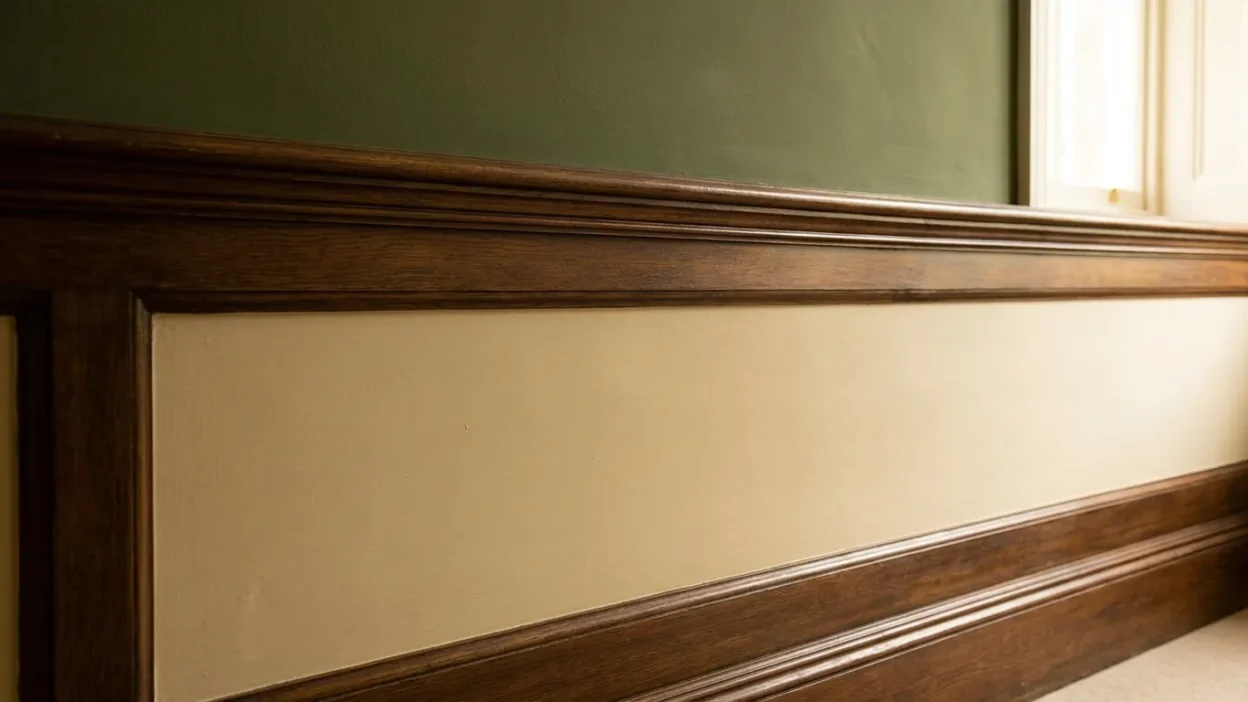
In English, one meaning relates to interior walls. A dado is the lower section of a wall when it has a different color, paper, or finish from the upper section. This meaning often appears in discussions about interior design, historic buildings, and wall decoration.
In American woodworking, dado has a more technical meaning. It is a long cut or groove made into a piece of wood. The edge of another piece can fit into this groove to form a joint.
The word also appears in Spanish. In Spanish, dado can mean a die, such as one cube used in a game. The plural form dados means dice.
This is why you should not assume that every use of dado has the same meaning.
Dado Meaning in English
When English speakers use dado as a noun, they may be talking about a wall or woodworking.
The wall meaning describes the lower section of an interior wall. It may have a different paint color, wallpaper, or other covering from the upper wall.
For example:
“The designer painted the dado a deep green.”
Here, dado refers to the lower part of the wall.
The term can also appear in the phrase dado rail. A dado rail is a narrow decorative strip fixed around a wall, often at about the height that separates the lower and upper sections. Cambridge notes that dado rail can also be shortened to dado.
Dado Meaning in Spanish
One of the most common reasons people search for dado meaning is because they have seen the word in Spanish.
In Spanish, dado can mean “die” when talking about a game. A die is a small cube with numbered sides or spots that people roll in games.
For example:
un dado = one die
dos dados = two dice
los dados = the dice
Cambridge’s English-Spanish Dictionary translates the English word dice as dado for the singular object and dados for the plural.
Example
Spanish: Necesito un dado.
English: I need a die.
Another example is:
Spanish: Vamos a tirar los dados.
English: Let’s roll the dice.
The exact sentence helps you understand which sense of dado the speaker means.
Dado Meaning in Woodworking
If you found dado in a woodworking guide, it probably does not refer to a game.
In woodworking, a dado is a groove cut across or into a piece of wood. Another board can fit into this groove. This creates a strong and useful joint.
For example, a cabinet shelf may fit into a dado cut into the cabinet side.
This type of joint is useful because the groove helps hold the shelf in place. Woodworkers may use tools such as a dado blade or another suitable cutting tool to make the groove.
Cambridge specifically defines the American woodworking sense as a long cut made in wood so that the edge of another piece can fit into it.
Simple woodworking example
Imagine a wooden cabinet.
- The side panel has a long groove.
- The shelf has an edge that fits into the groove.
- The groove is the dado.
- The resulting connection is a dado joint.
This meaning is common in carpentry, cabinetmaking, furniture building, and woodworking plans.
Dado Meaning in Interior Design
The word dado also has a place in interior design.
A traditional wall may have three visual areas:
- The lower wall section
- A decorative strip or rail
- The upper wall section
The lower section can have a different finish from the upper wall. This lower section is called the dado.
For example, a room may have dark paneling on the lower half of the wall and light paint above it.
This design can help divide a wall into clear sections. It also appears in older buildings and traditional interior styles.
The term is especially useful when reading descriptions of architecture or historic interiors.
Dado Pronunciation
The English word dado is commonly pronounced in two syllables.
Cambridge gives the British pronunciation as /ˈdeɪ.dəʊ/ and the US pronunciation as /ˈdeɪ.doʊ/.
The main stress falls on the first syllable.
The Spanish word dado has a different pronunciation because Spanish follows its own sound system. So, if you are reading a Spanish sentence, do not automatically use the English pronunciation.
The language and context matter.
Dado Plural: Dados or Dadoes?
The plural form depends on which English use you mean.
For the English noun dado, Cambridge lists dados and dadoes as plural forms.
In Spanish, dados is the plural form of dado when referring to dice.
This can create some confusion because dados can appear in both English and Spanish contexts.
For example:
- English woodworking: dados
- Spanish games: dados
You need to look at the surrounding words to know which language and meaning apply.
Dado vs. Dice
A useful distinction appears when comparing the Spanish word dado with the English word dice.
In English, die normally refers to one game cube, while dice refers to the plural.
In Spanish, dado is singular and dados is plural.
So:
| Word | Language | Meaning |
| dado | Spanish | one die |
| dados | Spanish | dice |
| die | English | one game cube |
| dice | English | dice or multiple game cubes |
| dado | English | wall section or woodworking groove |
This difference is useful when translating between English and Spanish.
Dado in a Sentence
The best way to understand dado meaning is to see it in real sentences.
English wall use
“The lower dado was covered with painted wood.”
Here, dado refers to the lower part of an interior wall.
English woodworking use
“The carpenter cut a dado for the shelf.”
Here, dado means a groove in wood.
Spanish game use
“El dado cayó sobre el número seis.”
This means:
“The die landed on six.”
Spanish plural use
“Los niños lanzaron los dados.”
This means:
“The children rolled the dice.”
These examples show why context is so important.
Comparison: Common Meanings of Dado
| Context | Meaning | Example |
| English interior design | Lower part of an inside wall | “The dado has a darker finish.” |
| English architecture | Lower wall section with a different treatment | “The old room had a decorative dado.” |
| American woodworking | Groove cut into wood | “Cut a dado for the shelf.” |
| Spanish games | A die | “Necesito un dado.” |
| Spanish plural | Dice | “Tira los dados.” |
The word may look the same, but its meaning changes with the language and subject.
How to Tell Which Dado Meaning Is Correct
When you see the word dado, use the surrounding words as clues.
1. Look at the language
If the sentence is Spanish, dado may refer to a die.
If the sentence is English, it may refer to a wall section or woodworking groove.
2. Look at nearby words
Words such as wood, groove, shelf, joint, cabinet, and blade suggest woodworking. Words such as game, roll, number, six, and dice suggest the Spanish game-related meaning.
3. Read the whole sentence
Never translate a single word without checking the sentence around it.
A dictionary gives possible meanings. The sentence tells you which meaning the writer intended.
4. Check the subject
A woodworking article and a Spanish language lesson may use the same word in completely different ways.
The topic often gives you the answer right away.
Common Mistakes With Dado Meaning
People often make a few simple mistakes when they first see this word.
Mistake 1: Assuming dado always means dice
This is only true in certain language contexts.
In English woodworking, dado has nothing to do with games.
Mistake 2: Treating dado as an English everyday word
The English building and woodworking senses are real, but they are more specialized than common words such as wall or groove.
You may see dado more often in architecture, interior design, carpentry, or woodworking material.
Mistake 3: Confusing dado with dado rail
A dado can refer to the lower part of a wall, while a dado rail is a decorative strip associated with that division.
They are related terms, but they are not always interchangeable.
Mistake 4: Ignoring the language
If you see dado in Spanish, do not automatically apply the English woodworking definition.
Always identify the language first.
Dado vs. Dado Rail
The terms dado and dado rail are closely connected in interior design.
A dado can mean the lower section of an interior wall.
A dado rail is a long, thin decorative piece fixed around the wall. It can separate the lower section from the upper section. Cambridge lists dado rail as a related term and notes that dado can also be used as a shortened form.
In simple terms:
Dado = lower wall section
Dado rail = decorative strip around the wall
The exact use can vary by region and context.
Dado vs. Dado Joint
In woodworking, these terms are related but not identical.
A dado is the groove cut into the wood.
A dado joint is the joint created when another piece fits into that groove.
For example, a shelf can sit inside a dado cut into a cabinet side.
This distinction matters when reading woodworking plans. If a guide tells you to “cut a dado,” it is asking you to make the groove. If it discusses a “dado joint,” it is talking about the connection created by that groove.
Quick Reference Checklist
| What you see | Meaning to consider | Quick clue |
| dado + wood | Woodworking groove | Cabinet, shelf, joint |
| dado + wall | Lower wall section | Paint, panel, wallpaper |
| dado rail | Decorative wall strip | Interior design |
| dado in Spanish | Die | Game or chance |
| dados in Spanish | Dice | Roll or throw |
| dado joint | Woodworking joint | Shelf or cabinet |
Use this checklist before translating or defining the word. It can help you avoid choosing the wrong meaning.
Why Context Matters So Much
Words do not always have one fixed meaning.
The word dado is a good example. A carpenter, an interior designer, and a Spanish speaker may all use the same word while talking about very different things.
This is why strong vocabulary skills involve more than memorizing definitions.
You also need to ask:
- What language is being used?
- What topic is being discussed?
- What words appear near dado?
- Is the word being used in a technical field?
- Is it singular or plural?
These small clues can quickly reveal the intended meaning.
FAQs:
1. What does dado mean in English?
In English, dado can mean the lower part of an interior wall that has a different finish from the upper section. In American woodworking, it can also mean a groove cut into wood for another piece to fit into.
2. What does dado mean in Spanish?
In Spanish, dado commonly means “die,” referring to one cube used in games. The plural dados means “dice.”
3. What is a dado in woodworking?
A dado is a groove cut into a piece of wood. Another wooden piece can fit into the groove. Woodworkers use this type of joint in projects such as cabinets and furniture.
4. What is a dado on a wall?
A dado is the lower section of an interior wall when it has a different color, covering, or finish from the upper part. The term often appears in interior design and architecture.
5. What is the plural of dado?
In English, dados and dadoes are listed as plural forms. In Spanish, dados is the plural of dado when talking about dice.
6. Is dado the same as dice?
Not always. In Spanish, dado can mean one die, while dados means dice. In English, dado usually has a building or woodworking meaning, not a game-related meaning.
7. How do I know which meaning of dado is correct?
Check the language and context. Words about shelves, cabinets, grooves, and joints point to woodworking. Words about walls and paint point to interior design. A Spanish sentence about rolling or throwing something points to the game-related meaning.
Conclusion:
The dado meaning changes with context, which is why this small word can cause confusion. In English, it can describe the lower part of an interior wall or a groove cut into wood. In Spanish, dado can mean a single die, while dados means dice.
The easiest way to understand the word is to check the language, subject, and nearby words. If you see dado in a woodworking guide, think groove. If you see it in an interior design text, think lower wall section.
When in doubt, read the full sentence before choosing a meaning.