Italy and Norway are both European countries, but they differ greatly in population, climate, geography, economy, and everyday costs.
Italy has a much larger population and total economy, while Norway has a much higher GDP per person and generally higher prices and salaries.
The two countries are also very different in climate, landscapes, and culture.
Key Takeaways
- Italy has about 59 million people, while Norway has about 5.6 million.
- Norway and Italy are surprisingly close in total land area.
- Norway has a much higher GDP per capita, while Italy has the larger total economy.
- Everyday living costs are generally higher in Norway.
- Italy is known for Mediterranean landscapes and historic cities, while Norway is known for fjords, mountains, and northern landscapes.
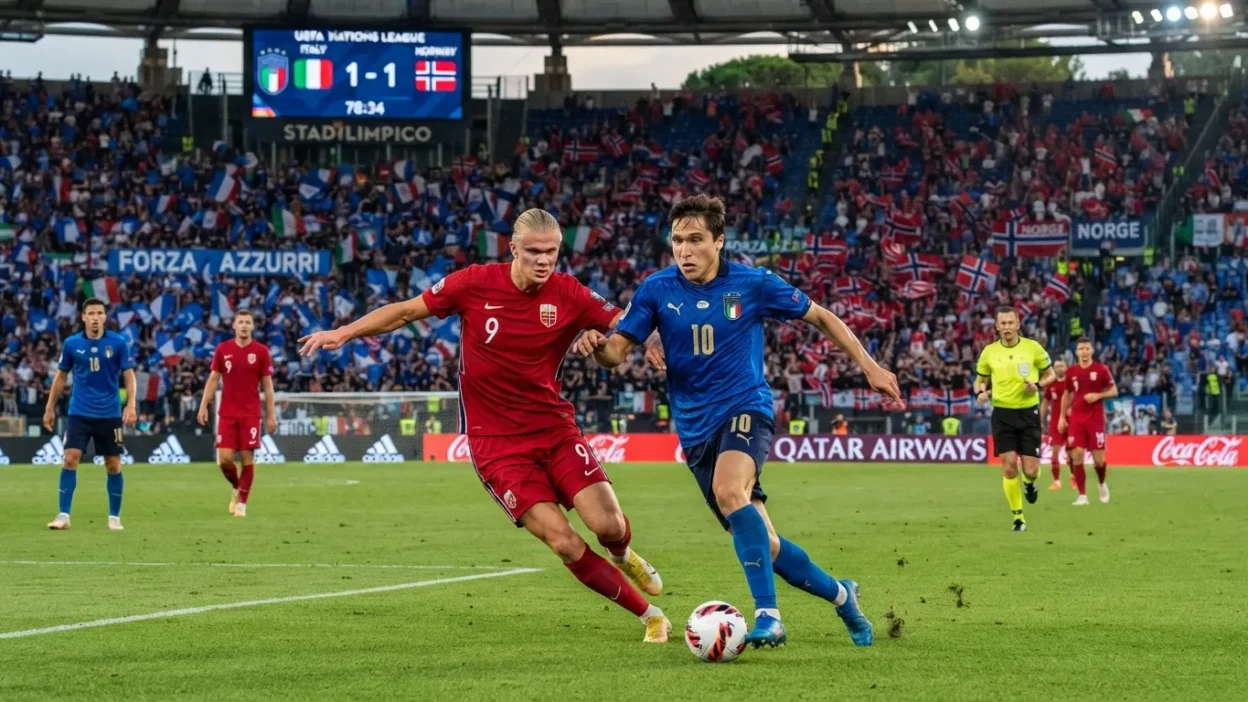
- “Italy vs Norway” can also refer to football; their men’s national teams met in 2025 World Cup qualifying.
Italy vs Norway at a Glance
Italy and Norway are both located in Europe, but they offer very different environments and lifestyles.
Italy is in southern Europe and stretches from the Alps in the north to the Mediterranean islands of Sicily and Sardinia. Norway is in Northern Europe and forms part of Scandinavia. Its landscape includes long coastlines, mountains, islands, and famous fjords.
Here is a quick comparison:
| Category | Italy | Norway |
| Region | Southern Europe | Northern Europe / Scandinavia |
| Population | About 59 million | About 5.6 million |
| Land area | About 301,000 km² | About 324,000 km² |
| Currency | Euro (€) | Norwegian krone (NOK) |
| Climate | Mostly Mediterranean to Alpine | Mostly temperate to subarctic |
| Capital | Rome | Oslo |
| Main language | Italian | Norwegian |
| Total GDP | Much larger | Smaller |
| GDP per capita | Lower | Much higher |
| General price level | Lower | Higher |
Recent comparison data puts Italy’s 2025 population at about 58.9 million and Norway’s at about 5.6 million. The same data shows Italy’s nominal GDP at roughly $2.55 trillion compared with about $531 billion for Norway.
Size, Geography, and Population
Which Is Bigger: Italy or Norway?
Norway is slightly larger by total area.
Recent country comparison figures put Norway at approximately 323,800 km² and Italy at about 301,300 km². That means the difference is relatively small compared with their huge difference in population.
Norway’s geography makes much of its territory feel more spacious. Mountains, forests, lakes, islands, and fjords cover large areas.
Italy has a more densely settled landscape. Its major cities include Rome, Milan, Naples, Turin, and Florence, while large areas are also used for agriculture and tourism.
Which Country Has More People?
Italy has far more people.
Italy has roughly 59 million residents, compared with around 5.6 million in Norway. That makes Italy’s population more than ten times the size of Norway’s.
This difference affects cities, transportation, housing patterns, and population density. Italy has many large urban areas and densely populated regions. Norway has a much smaller population spread across a large and geographically challenging territory.
Economy and Income
GDP vs GDP Per Capita
This is one of the most important differences in an Italy vs Norway comparison.
Italy has the larger economy in total. Its nominal GDP was about $2.55 trillion in 2025, compared with about $531 billion for Norway. However, Norway has a much smaller population, so GDP per person tells a different story.
In 2025, GDP per capita was approximately $43,300 in Italy and $94,300 in Norway according to recent country comparison data.
In simple terms, Italy has a much larger economy overall because it has many more people, while Norway produces substantially more economic output per person.
Cost of Living
Norway is generally more expensive for everyday living.
A June 2026 cost-of-living comparison estimated monthly expenses for one person at about $1,624 in Italy versus $2,371 in Norway. It also estimated higher rent, food, and transportation costs in Norway.
Other 2026 comparisons show the same broad pattern, although the exact percentages differ depending on the cities, basket of goods, housing assumptions, and data sources.
This matters because a country’s higher salary does not automatically mean everything is more affordable. Norway’s higher income levels exist alongside higher prices.
Climate and Landscape
Italy’s Climate
Italy has a wide range of climates.
Southern areas and many coastal regions have Mediterranean conditions, with hot or warm summers and relatively mild winters. Northern Italy has colder winters, while the Alps provide a mountain climate.
This variety makes Italy suitable for different types of travel, from beaches and historic cities to skiing in the Alps.
Norway’s Climate
Norway is much farther north and generally has a colder climate.
However, Norway is not uniformly freezing. Coastal areas can have milder conditions because of the influence of the North Atlantic. Inland and northern regions can experience much colder winters.
Norway’s landscape is one of its defining features. Mountains, fjords, waterfalls, forests, and Arctic landscapes are major parts of the country’s identity.
Culture and Lifestyle
Italy and Norway have distinct cultural traditions.
Italy is strongly associated with Roman history, Renaissance art, architecture, regional food traditions, fashion, football, and Mediterranean culture. Cities such as Rome, Florence, Venice, and Milan have different historical and cultural identities.
Norway is associated with Scandinavian culture, outdoor recreation, maritime history, winter sports, hiking, and nature. Outdoor activities are an important part of life in many Norwegian regions.
Neither country has one single lifestyle. Experiences can vary significantly between major cities, rural communities, coastal areas, and northern regions.
Travel: Italy vs Norway
The better destination depends on what type of trip a traveler wants.
Italy offers ancient ruins, museums, art, historic cities, Mediterranean beaches, vineyards, mountain areas, and famous regional cuisines. It also has a large number of well-known tourist destinations.
Norway offers fjords, mountains, scenic drives, hiking, northern landscapes, and opportunities to experience the midnight sun or northern lights in appropriate seasons and locations.
The countries also have strong tourism connections. Italy’s embassy in Norway reports that around 300,000 Norwegians visit Italy each year, while around 120,000 Italian tourists stay in Norwegian hotels annually, based on the figures cited on its tourism page.
Currency, Language, and Schengen
Italy uses the euro (€).
Norway uses the Norwegian krone (NOK).
Neither country has English as its main official language. Italian is the main language of Italy, while Norway has Norwegian as its primary national language, with written standards including Bokmål and Nynorsk.
Both countries are part of the Schengen Area, which affects travel between them and other participating European countries. For example, official Norwegian information states that Italian citizens do not need a visitor visa for Norway for short stays within the applicable Schengen rules.
Visa requirements for U.S. citizens and other travelers depend on nationality, purpose, and length of stay, so travelers should check current official requirements before planning a trip.
Italy vs Norway in Football
The phrase “Italy vs Norway” also has a major football meaning.
The men’s national teams met in UEFA World Cup qualifying on November 16, 2025, at San Siro in Milan. Norway won the match 4–1. Pio Esposito scored for Italy, while Antonio Nusa, Erling Haaland twice, and Jørgen Strand Larsen scored for Norway. UEFA’s official match report recorded 69,020 spectators.
The result is worth mentioning because football-related searches for “Italy vs Norway” can refer specifically to this fixture rather than a comparison of the two countries.
Which Is Different for Different Types of Travelers or Residents?
For history and art, Italy offers an especially large concentration of ancient, medieval, and Renaissance sites.
For mountains and dramatic natural scenery, Norway is particularly known for fjords, highlands, and northern landscapes.
And, also for lower everyday costs, recent country-level comparisons generally place Italy below Norway, although the actual difference depends heavily on the city and lifestyle.
For income comparisons, Norway has substantially higher GDP per capita, but that should be considered together with its higher cost of living.
For population and urban scale, Italy is much larger. Norway has a much smaller population despite having slightly more land area.
FAQs:
Is Italy bigger than Norway?
No. Norway is slightly larger by total area. Recent figures put Norway at about 323,800 km² and Italy at about 301,300 km². The two countries are therefore relatively close in physical size, even though their populations are dramatically different.
Is Italy cheaper than Norway?
Generally, yes. Recent 2026 cost-of-living comparisons show higher average living costs in Norway, including housing and food. However, costs vary greatly between cities, housing types, and personal lifestyles, so a country-level figure should be treated as a broad guide rather than a personal budget.
Is Norway richer than Italy?
It depends on how “richer” is measured. Italy has the larger total economy, while Norway has substantially higher GDP per capita. Recent 2025 figures put GDP per capita at roughly $94,300 in Norway compared with about $43,300 in Italy.
Which is colder, Italy or Norway?
Norway is generally colder because it is much farther north. Italy has a broad range of climates, including Mediterranean conditions in many southern and coastal areas. Northern Italy can still have cold winters, particularly in the Alps.
What happened in Italy vs Norway football?
In the men’s UEFA World Cup qualifying match on November 16, 2025, Norway defeated Italy 4–1 at San Siro. Italy scored first through Pio Esposito, but Norway scored four times in the second half.
Conclusion:
Italy vs Norway is not simply a comparison between two European countries. They have similar overall land-area scales but very different populations, climates, economies, landscapes, and everyday costs.
Italy has a much larger population and total economy, while Norway has a much higher GDP per capita and generally higher living costs.
Italy offers Mediterranean culture, historic cities, art, food, and varied landscapes. Norway is known for dramatic natural scenery, mountains, fjords, and a northern climate.
If you searched “Italy vs Norway” because of football, the phrase can also refer to their men’s national-team fixture, including the 4–1 Norway victory in November 2025.

I am Ernest Angelou, the heart and voice behind prayersvibe.com.
I am someone who believes that prayers are not just words, but a deep conversation between the soul and God.
I am here to share faith-filled prayers that bring peace, hope, and divine comfort into everyday life.