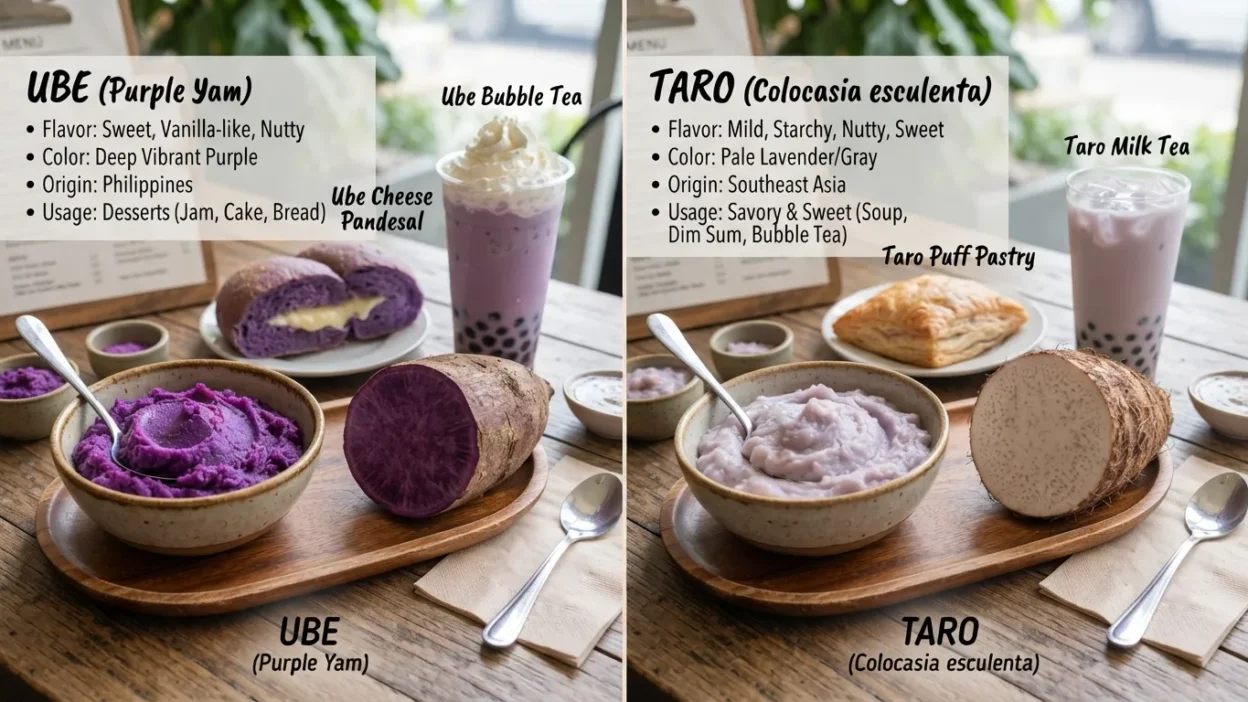
Ube and taro are not the same. Ube is a purple yam, scientifically known as Dioscorea alata, with naturally violet flesh and a mildly sweet, nutty, vanilla-like flavor.
Taro is Colocasia esculenta, a starchy corm with pale flesh and a mild, earthy, nutty taste. They also differ in texture and common culinary uses.
Key Takeaways
- Ube is a purple yam, while taro is a different plant grown for its starchy corm.
- Ube is usually naturally deep purple, while fresh taro is generally white, cream, or lightly purple-speckled.
- Ube has a sweeter, creamy, vanilla-like flavor; taro is milder, earthier, and starchier.
- Ube is strongly associated with desserts and sweet drinks, while taro is used in both sweet and savory foods.
- Purple color alone does not tell you whether a food contains ube or taro.
What Is Ube?
Ube is a variety of purple yam, commonly identified as Dioscorea alata. It has long been associated with Filipino cooking and is especially popular in desserts.
The most noticeable feature of ube is its color. The flesh can range from violet to deep purple, depending on the variety and preparation. USDA sources identify Dioscorea alata as water yam and purple yam.
Ube also has a distinctive flavor. It is mildly sweet and is often described as creamy, nutty, and vanilla-like. This makes it a natural fit for cakes, ice cream, cookies, pastries, spreads, and sweet drinks.
A classic Filipino preparation is ube halaya, a sweet purple yam spread. Ube is also commonly used in halo-halo and modern desserts such as ube cheesecake and ube ice cream.
What Is Taro?
Taro is a completely different plant from ube. Its scientific name is Colocasia esculenta, and the edible part is a starchy underground corm.
Taro is widely used in Asian, Pacific Island, African, and Caribbean cuisines. Unlike ube, it is not limited to desserts. It can be boiled, steamed, mashed, fried, or added to savory dishes.
The inside of fresh taro is usually pale cream or white, sometimes with small purple or grayish flecks. Its flavor is mild, earthy, nutty, and starchy.
Taro is also popular in bubble tea and other sweet drinks. However, the strong purple color of a taro drink does not necessarily mean the drink contains naturally purple taro.
Ube vs Taro: Key Differences
The easiest way to understand ube vs taro is to compare their identity, color, taste, texture, and common uses.
| Feature | Ube | Taro |
| Scientific name | Dioscorea alata | Colocasia esculenta |
| Plant type | Purple yam | Starchy corm |
| Natural flesh | Purple to violet | White, cream, or lightly speckled |
| Flavor | Sweet, nutty, vanilla-like | Mild, earthy, nutty |
| Texture | Creamy when cooked | Starchy and dense |
| Common uses | Desserts and sweet drinks | Sweet and savory dishes |
| Popular drinks | Ube latte, shakes | Taro milk tea, smoothies |
These differences explain why the two ingredients can look similar in a dessert shop but produce noticeably different flavors.
Color and Appearance
Color is one of the easiest ways to tell ube and taro apart when you are looking at the fresh ingredients.
Ube is naturally purple inside. Its color can be quite vivid, although the exact shade varies.
Taro is usually much lighter. Its flesh is commonly cream or white with small purple or grayish markings.
The important point is that a purple finished food does not automatically mean it contains ube. Commercial powders, flavorings, and food coloring can change the appearance of taro-based drinks and desserts.
Taste and Flavor
Ube is generally sweeter than taro. Its flavor is often described as creamy, nutty, and lightly vanilla-like.
Taro has a more neutral flavor. It can taste earthy, nutty, and starchy, with less natural sweetness.
This difference becomes easy to notice when the ingredients are used in simple preparations. Ube tends to give a dessert a recognizable sweet aroma, while taro provides a more subtle base that works well with other ingredients.
Texture
Both ingredients are starchy, but their cooked textures can feel different.
Ube can become soft and creamy when cooked and mashed. This makes it useful in fillings, spreads, ice cream, cakes, and other smooth desserts.
Taro has a denser and starchier texture. Depending on how it is prepared, it can become creamy when mashed but may retain a heavier, more potato-like body.
Culinary Uses
Ube is especially popular in sweet foods. Common examples include:
- Ube halaya
- Ube ice cream
- Ube cake
- Ube cheesecake
- Ube cookies
- Ube lattes
- Sweet pastries
- Filipino desserts
Taro has a wider range of uses. It can appear in:
- Taro milk tea
- Bubble tea
- Taro desserts
- Taro chips
- Soups
- Stews
- Mashed dishes
- Savory recipes
Food Network similarly notes that ube is especially associated with desserts, while taro is used in both sweet and savory preparations.
Why Do People Confuse Ube and Taro?
The confusion mostly comes down to three things: color, texture, and shared uses.
Both ingredients appear in Asian desserts and drinks. Both can be turned into creamy fillings, frozen desserts, milk teas, and lattes. And both may appear purple on a café menu.
The biggest confusion happens with drinks.
A customer may order a bright-purple taro milk tea and assume that taro itself is naturally deep purple. In reality, fresh taro is usually much paler. Commercial drink mixes may contain added coloring, sweeteners, flavorings, or other ingredients that create the familiar purple appearance.
Is Taro Naturally Purple?
Taro is not usually deep purple naturally.
Fresh taro generally has pale cream or white flesh, sometimes with purple or grayish flecks. Some cooked taro preparations can look more purple, and commercial taro products may have added color.
Ube, by contrast, is naturally known for its purple flesh. That makes color a useful clue, but not a perfect way to identify the ingredient in a finished food or drink.
If you want to know what is actually in a packaged product, check the ingredient list rather than relying only on its color.
Ube vs Taro in Drinks and Desserts
Both ingredients work well in drinks, but they create different flavor experiences.
Ube Latte vs Taro Latte
An ube latte usually has a sweeter, richer, dessert-like flavor. Ube pairs naturally with milk because its nutty and vanilla-like notes can complement creamy ingredients.
A taro latte is generally milder and more starchy. Its flavor may depend heavily on the preparation or commercial mix used by the café.
The name alone is not always enough to predict the exact flavor. Some café products use powders containing sugar, flavoring, coloring, or blends rather than only the fresh ingredient.
Ube Ice Cream vs Taro Desserts
Ube is particularly popular in ice cream because its color and sweet flavor stand out.
Taro can also be used in ice cream, puddings, cakes, and other desserts. However, its milder taste often allows other ingredients to play a larger role.
If you want a dessert with a strong natural purple appearance and a sweeter, vanilla-like profile, ube is the ingredient most closely associated with that result.
Can You Substitute Ube for Taro?
You can substitute them in some recipes, but the result will not be identical.
Ube is sweeter and more strongly colored. Taro is generally milder and starchier. Replacing one with the other can therefore change the color, sweetness, aroma, and texture of a recipe.
For a cake, ice cream, or latte where the ube flavor is central, taro will not provide the same result.
For a recipe where the ingredient mainly contributes starch and body, a substitution may be more practical. You may still need to adjust sugar, liquid, or other ingredients depending on the recipe.
In other words, choose based on the result you want rather than treating ube and taro as interchangeable names.
Ube vs Taro vs Purple Sweet Potato
Ube and taro are also often confused with purple sweet potato.
Purple sweet potato is a third, separate ingredient. It belongs to Ipomoea batatas, while ube is Dioscorea alata and taro is Colocasia esculenta.
Purple sweet potato can also have naturally purple flesh, which makes it visually similar to ube. Its flavor, however, tends to be more like a sweet potato, while ube has the distinctive sweet, nutty, vanilla-like profile commonly associated with Filipino desserts.
So when buying a purple ingredient, check the name and ingredient list carefully. Purple does not automatically mean ube.
FAQs:
Is ube the same as taro?
No. Ube is a purple yam known as Dioscorea alata, while taro is Colocasia esculenta, a different plant grown for its starchy corm. They have different natural colors, flavors, textures, and culinary uses.
Does ube taste like taro?
Not exactly. Ube is usually sweeter and has a creamy, nutty, vanilla-like flavor. Taro is milder, earthier, nuttier, and starchier. Commercial drinks can make the difference harder to notice because sugar and flavorings may change the final taste.
Which is sweeter, ube or taro?
Ube is generally sweeter than taro. Its natural flavor works especially well in desserts. Taro has a more neutral, starchy flavor, which is one reason it works in both sweet and savory dishes.
Is taro naturally purple?
Usually, no. Fresh taro is commonly white or cream-colored with small purple or grayish flecks. Strong purple color in a taro drink or dessert may come from added coloring, flavoring, or another purple ingredient.
Can you substitute ube for taro?
Sometimes, but they will not produce exactly the same result. Ube generally adds more sweetness and purple color, while taro provides a milder, starchier flavor. The best substitute depends on the recipe and the result you want.
Conclusion:
The main difference in ube vs taro is simple: they are different plants with different flavors, colors, and uses.
Ube is a purple yam with naturally violet flesh and a sweet, creamy, nutty flavor often compared with vanilla. Taro is a starchy corm with pale flesh and a milder, earthy flavor.
Both can be delicious in drinks and desserts, but they are not the same ingredient. If you want a naturally purple ingredient with a distinct sweet dessert flavor, ube fits that role.
If you want a mild, starchy ingredient that can work in both sweet and savory dishes, taro offers a different option.
And when a purple drink leaves you wondering which ingredient you are tasting, check the product or ingredient list rather than judging by color alone.

I’m Michael Carter, a writer passionate about education, general information, language, and the meaning behind words and phrases. At PrayersVibe.com, I create clear and useful content that helps readers understand topics without complicated language. I enjoy researching different subjects and sharing accurate information in a simple, reader-friendly way.