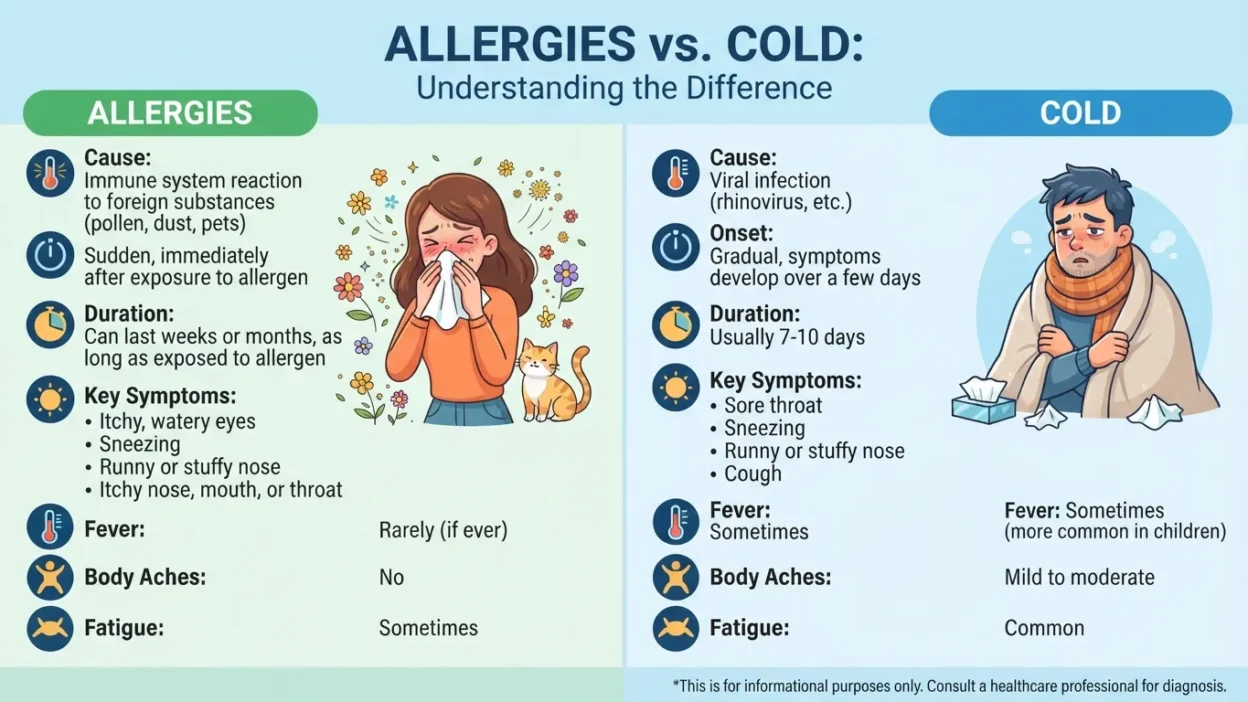
Allergies and colds can both cause sneezing, a runny or stuffy nose, and coughing.
Allergies are more likely to cause itchy or watery eyes and symptoms that continue with allergen exposure, while a cold is more likely to cause a sore throat, body aches, or a mild fever.
Colds are caused by viruses; allergies are triggered by allergens.
Key Takeaways
- Itchy eyes, nose, or throat strongly suggest allergies.
- Fever, body aches, and a sore throat are more common with a cold.
- Allergies can last for weeks or longer while you remain exposed to a trigger.
- A common cold usually improves within about a week, although some symptoms can last longer.
- Allergies are not contagious, but colds are caused by viruses and can spread to other people.
Allergies vs Cold: What Is the Difference?
Allergies and the common cold can feel very similar. Both may cause sneezing, congestion, a runny nose, coughing, and tiredness. That overlap makes it easy to mistake one for the other.
The biggest difference is the cause.
Allergies happen when your immune system reacts to an otherwise harmless substance called an allergen. Common triggers include pollen, pet dander, dust mites, and mold. Allergic rhinitis, often called hay fever, commonly affects the nose and eyes.
A cold is different. It is a viral infection of the upper respiratory tract. More than 200 respiratory viruses can cause colds, with rhinoviruses being a common cause. Colds can spread from person to person.
What Causes Allergies?
Allergies occur when your immune system mistakenly treats a harmless substance as a threat.
For example, if you have a pollen allergy, your body reacts when you breathe in certain types of pollen. This reaction can lead to sneezing, nasal congestion, itching, and watery eyes.
Allergy symptoms may appear quickly after exposure to a trigger and may return whenever you encounter that trigger.
What Causes a Common Cold?
A cold is caused by a respiratory virus. The virus enters your body and causes an immune response that produces symptoms such as congestion, sneezing, coughing, sore throat, headache, and mild body aches.
Cold symptoms commonly peak within the first few days and then gradually improve.
Allergies vs Cold Symptoms: Side-by-Side Comparison
| Symptom or clue | Allergies | Common cold |
| Sneezing | Very common | Common |
| Runny nose | Common | Common |
| Stuffy nose | Common | Common |
| Itchy eyes | Common | Uncommon |
| Watery eyes | Common | Sometimes |
| Itchy nose or throat | Common | Uncommon |
| Sore throat | Sometimes, often from drainage | Common |
| Cough | Sometimes | Common |
| Fever | Not typical | Can occur |
| Body aches | Not typical | Can occur |
| Triggered by pollen, pets, dust, etc. | Common | No |
| Contagious | No | Yes |
| Typical duration | As long as exposure continues | Usually about a week |
No single symptom proves that you have allergies or a cold. However, the overall pattern can provide useful clues.
How to Tell If You Have Allergies or a Cold
Itchy Eyes and Nose
Itching is one of the most useful clues.
Allergies commonly cause itchy, watery, or red eyes. You may also have an itchy nose, throat, or roof of your mouth.
A cold can cause watery eyes, but significant itching is less typical. If your main complaint is repeated sneezing combined with itchy eyes, allergies may be more likely.
Fever and Body Aches
Fever points more toward an infection than an allergy.
Adults with a common cold may develop a low-grade fever, although it is not present in every case. Mild body aches can also occur with a cold.
Allergies do not normally cause fever or generalized body aches. If you have a fever along with respiratory symptoms, consider an infection rather than assuming it is seasonal allergies.
Sore Throat and Cough
A sore throat is more common with a cold.
Allergies can still irritate the throat, especially when mucus drains down the back of the throat. This is called postnasal drip. Allergies can also cause coughing, particularly when drainage irritates the throat.
A cough accompanied by a sore throat and other infection-like symptoms may fit a cold better than typical allergies.
Runny or Stuffy Nose
This is where the two conditions can be especially difficult to separate.
Both allergies and colds can cause a runny or blocked nose. A watery runny nose can occur with allergies, while a cold can also begin with clear nasal drainage.
Because this symptom occurs with both conditions, it is better to consider other clues, such as itching, fever, body aches, exposure to allergens, and how long the symptoms have lasted.
Timing and Triggers
Think about when your symptoms began.
If you start sneezing every time you spend time around cats, dust, pollen, or another known trigger, allergies become more likely.
Allergy symptoms may also return during the same season each year. Seasonal allergies can be triggered by tree pollen, grass pollen, weeds such as ragweed, and outdoor or indoor molds.
A cold, however, develops after infection with a virus. You may have been around someone who was sick, although you may not know exactly where you caught the virus.
How Long Symptoms Last
Duration is another useful clue.
The CDC says colds usually last less than a week, although symptoms can vary. Mayo Clinic notes that many common colds improve within about 7 to 10 days.
Allergy symptoms can continue for weeks or longer if you remain exposed to the allergen. For example, seasonal pollen may continue to trigger symptoms during part of an allergy season. Indoor allergens can cause symptoms throughout the year.
Can Allergies Cause a Sore Throat or Cough?
Yes. Allergies can cause a sore or irritated throat and coughing.
One common reason is postnasal drip, which happens when mucus moves from the nose toward the throat. Constant drainage can irritate the throat and trigger coughing.
However, a sore throat and cough are also common cold symptoms. The difference becomes clearer when you consider the entire pattern. Itchy eyes, repeated sneezing, and symptoms linked to pollen or another trigger point more toward allergies. Fever, body aches, and a typical short-term illness point more toward a cold.
Does Mucus Color Tell You Whether It Is a Cold?
Not by itself.
People sometimes assume that yellow or green mucus automatically means a bacterial infection or a cold. Mucus can change during respiratory infections, but its color alone does not establish the cause of your symptoms.
Instead of focusing only on mucus color, consider the full picture: fever, aches, sore throat, itching, exposure to allergens, and how long you have been sick.
If symptoms are severe, persistent, or getting worse, a healthcare professional can help determine the cause.
Can You Have Allergies and a Cold at the Same Time?
Yes.
Having allergies does not prevent you from catching a cold. A person who already has seasonal allergies can also become infected with a respiratory virus.
This can make symptoms harder to understand because congestion, sneezing, coughing, and fatigue may come from more than one cause.
If symptoms change significantly, last longer than expected, or include signs that concern you, talk with a healthcare professional rather than trying to identify the cause from one symptom alone.
How Are Allergies and Colds Treated?
Treatment depends on the cause.
A common cold has no cure, so treatment generally focuses on relieving symptoms while the body clears the viral infection. Rest, fluids, and appropriate symptom-relief measures may help. Antibiotics do not treat the viruses that cause common colds.
Allergy treatment focuses on reducing exposure to triggers and controlling the allergic response. Depending on the allergy and symptoms, healthcare professionals may recommend antihistamines, nasal treatments, saline rinses, or other options. Allergy testing may also help identify specific triggers when symptoms are persistent or difficult to control.
Do not assume that every cold-like symptom should be treated with the same medication. If you take prescription medicines, have other health conditions, are pregnant, or are treating a child, ask a healthcare professional or pharmacist which options are appropriate.
When Should You See a Doctor?
Most mild colds and many allergy symptoms can be managed without urgent medical care. However, medical advice may be appropriate when symptoms are severe, persistent, repeatedly return, or do not improve as expected.
Seek prompt medical attention for trouble breathing or other signs of a serious allergic reaction. Severe allergic reactions can become life-threatening.
Also consider medical advice if you are unsure whether your symptoms are allergies, a cold, or another respiratory illness. COVID-19 and influenza can produce symptoms that overlap with a cold, and testing may be appropriate in some situations, particularly for people at higher risk of severe illness.
FAQs:
Can allergies cause a fever?
Allergies generally do not cause fever. Fever is more consistent with an infection such as a cold or another respiratory illness. If you have a fever together with congestion, coughing, or a sore throat, do not automatically assume the symptoms are caused by allergies.
How long do allergies last compared with a cold?
Allergy symptoms can continue as long as you are exposed to the allergen. Seasonal symptoms may last for weeks, while exposure to indoor allergens can cause ongoing symptoms. A common cold usually improves within about a week, although some symptoms, such as a cough, may last longer.
Are allergies contagious?
No. Allergies are an immune response to allergens and cannot spread from one person to another. Colds are different because they are caused by viruses that can spread between people.
Is a runny nose more likely to be allergies or a cold?
A runny nose can occur with both. Allergies often cause a watery runny nose along with sneezing and itchy or watery eyes. A cold can also cause a runny nose but is more likely to include symptoms such as a sore throat, cough, mild fever, or body aches.
Can allergies and a cold happen together?
Yes. A person with allergies can still catch a cold. When both occur together, symptoms may overlap and become harder to identify. Looking at the complete pattern and how symptoms change over time can help, but a healthcare professional can provide a more reliable diagnosis when the cause is unclear.
Conclusion:
The easiest way to think about allergies vs cold is to look beyond a runny nose or sneeze.
Allergies are more likely when you have itchy or watery eyes, repeated sneezing, and symptoms that appear around a particular trigger or continue for weeks.
A cold is more likely when you develop a short-term illness with symptoms such as a sore throat, cough, mild fever, or body aches.
Neither condition can be identified with certainty from one symptom alone. If symptoms are severe, persistent, unusual, or difficult to manage, a healthcare professional can help determine what is causing them and what treatment is appropriate.

I’m Michael Carter, a writer passionate about education, general information, language, and the meaning behind words and phrases. At PrayersVibe.com, I create clear and useful content that helps readers understand topics without complicated language. I enjoy researching different subjects and sharing accurate information in a simple, reader-friendly way.