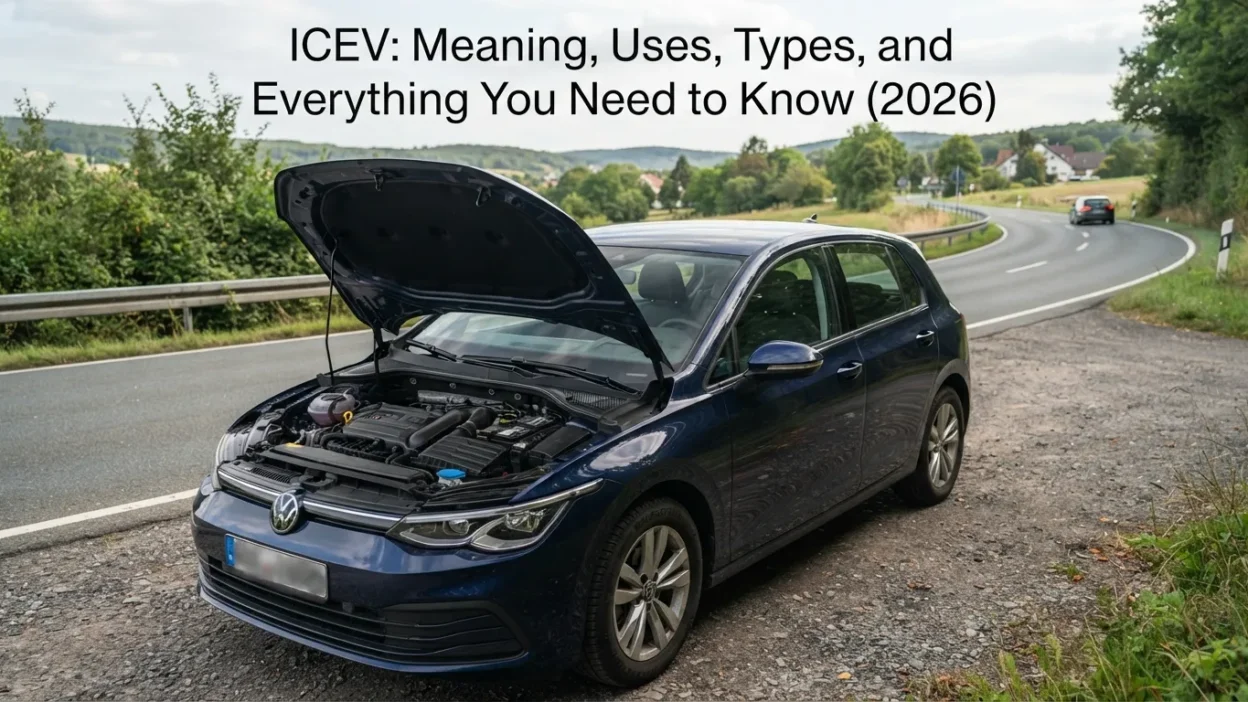
What comes to mind when you hear ICEV? If you have seen this term in an article about cars, climate change, or electric vehicles, you may wonder what those four letters actually mean.
ICEV stands for Internal Combustion Engine Vehicle. It describes a vehicle that uses an internal combustion engine to turn fuel into mechanical power.
For more than a century, ICEVs have been the main type of road vehicle around the world. Cars, trucks, buses, and many other vehicles still use this technology today.
But the rise of electric vehicles has made terms like ICEV, EV, BEV, PHEV, and hybrid vehicle more common.
In this guide, we will explain what ICEV means, how it works, its main types, advantages and disadvantages, and how it compares with electric and hybrid vehicles.
What Does ICEV Mean?
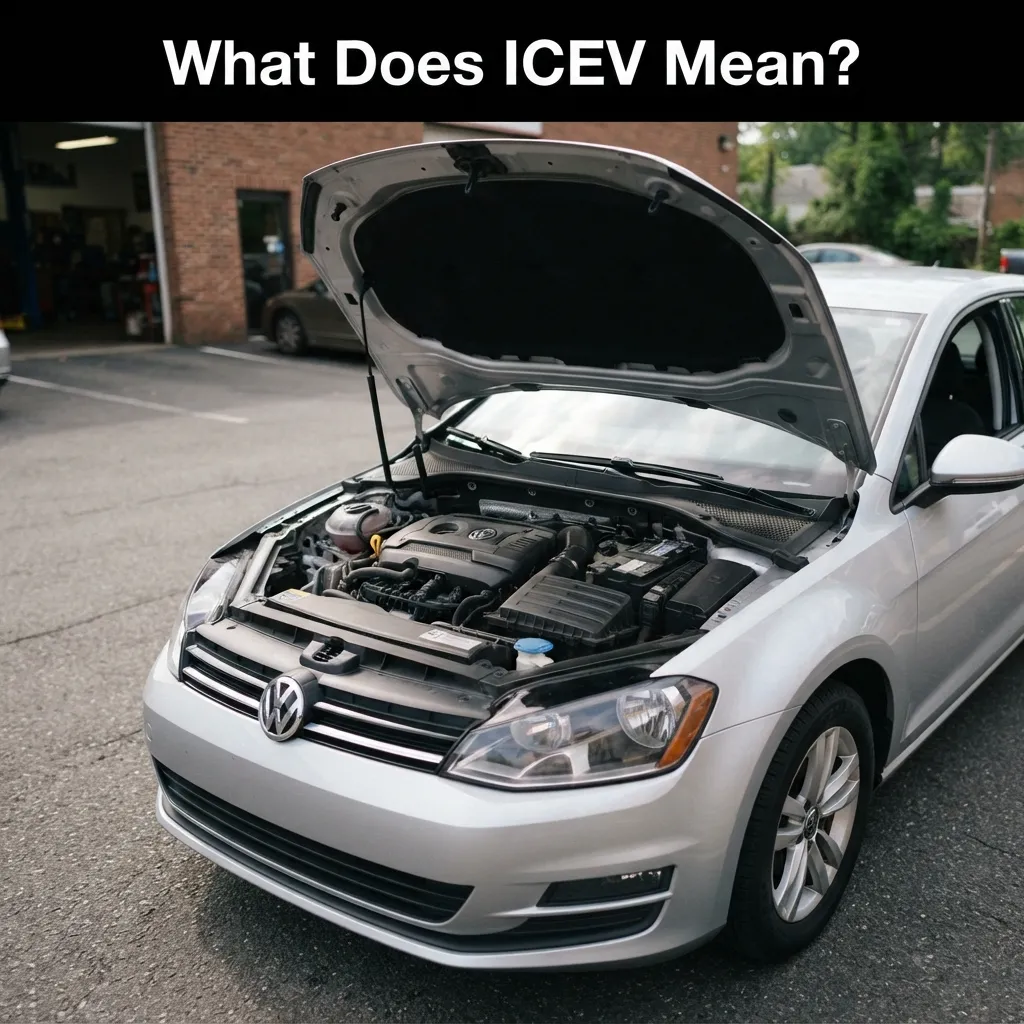
ICEV means Internal Combustion Engine Vehicle.
An ICEV is a vehicle that uses an internal combustion engine to produce power. The engine burns fuel, usually gasoline or diesel, inside the engine. This combustion creates energy that moves pistons and eventually turns the vehicle’s wheels.
The term is often used when comparing traditional vehicles with electric vehicles (EVs).
For example:
“Many ICEVs use gasoline, while EVs use electricity stored in a battery.”
ICEVs can include:
- Gasoline cars
- Diesel cars
- Pickup trucks
- SUVs
- Buses
- Delivery vehicles
- Motorcycles
- Some heavy-duty trucks
The key feature is simple: the vehicle gets its main driving power from an internal combustion engine.
How Does an ICEV Work?
An ICEV may look simple from the outside, but many parts work together to make it move.
The basic process starts with fuel.
A gasoline or diesel engine mixes fuel with air. The mixture is burned inside the engine’s cylinders. This creates high pressure that pushes the pistons.
The pistons move up and down. The crankshaft changes this movement into rotational motion.
That rotation travels through the vehicle’s drivetrain and eventually reaches the wheels.
The basic process looks like this:
Fuel + Air → Combustion → Piston Movement → Crankshaft Rotation → Wheels Move
This process happens many times per minute while the engine is running.
The Four-Stroke Engine Cycle
Many traditional ICEVs use a four-stroke engine cycle:
- Intake – The engine takes in air and fuel.
- Compression – The piston compresses the mixture.
- Power – Combustion creates pressure and pushes the piston down.
- Exhaust – Burned gases leave the cylinder.
This cycle repeats continuously while the engine operates.
What Are the Main Types of ICEVs?
ICEVs can be divided into several categories based on their fuel and engine design.
Gasoline ICEVs
Gasoline vehicles are among the most common ICEVs.
They use spark ignition. A spark plug ignites the compressed air-fuel mixture inside the cylinder.
Most conventional cars and many SUVs use gasoline engines.
Diesel ICEVs
Vehicles use compression ignition rather than a traditional spark plug to ignite the fuel.
Diesel engines are known for strong torque and are widely used in:
- Trucks
- Buses
- Commercial vehicles
- Heavy equipment
LPG and CNG Vehicles
Some internal combustion vehicles use alternative fuels such as liquefied petroleum gas (LPG) or compressed natural gas (CNG).
These vehicles still use combustion to create mechanical power. The main difference is the type of fuel used.
What Is the Difference Between ICEV and EV?
The biggest difference between an ICEV and an EV is how the vehicle produces power.
An ICEV burns fuel inside an engine.
An electric vehicle uses electricity stored in a battery to power an electric motor.
Here is a simple comparison:
| Feature | ICEV | EV |
| Main energy source | Gasoline, diesel, or other fuel | Electricity |
| Main power system | Combustion engine | Electric motor |
| Fuel tank | Usually yes | No |
| Large traction battery | No | Yes |
| Tailpipe emissions | Usually yes | No tailpipe emissions |
| Refueling | Fuel station | Charging station or home charger |
| Engine oil | Usually required | No engine oil for an electric motor |
An EV is not simply an ICEV with a different fuel tank. Its powertrain is designed around electric motors and battery storage.
ICEV vs Hybrid Vehicles
A hybrid vehicle combines two types of propulsion.
Most modern hybrids use:
- An internal combustion engine
- An electric motor
- A battery
This means a hybrid can use both combustion and electric power.
A conventional ICEV generally relies on its combustion engine as the primary source of propulsion.
A plug-in hybrid electric vehicle (PHEV) can usually be charged from an external power source and can travel a certain distance using electric power before the combustion engine becomes more important.
This creates a broad range of vehicle technologies:
ICEV → Hybrid → PHEV → BEV
The exact design varies by vehicle.
Why Are ICEVs Still Popular?
Despite the rapid growth of electric vehicles, ICEVs remain common for several reasons.
Existing Fuel Infrastructure
Gas stations are available across many countries.
Drivers can often find a fuel station quickly, making long-distance travel convenient.
Long Driving Range
Many gasoline and diesel vehicles can travel long distances on one tank of fuel.
This can be useful for people who frequently drive between cities or travel through areas with limited charging infrastructure.
Fast Refueling
Filling a conventional vehicle with fuel often takes only a few minutes.
Charging times for EVs vary greatly depending on the vehicle, charger, battery, and charging conditions.
Established Technology
Internal combustion engines have been developed and refined for more than 100 years.
As a result, there is a large global supply chain for manufacturing, maintenance, repair, and replacement parts.
Wide Vehicle Choice
Consumers can find ICEVs in many sizes and categories.
There are small city cars, family SUVs, sports cars, pickup trucks, vans, buses, and heavy-duty vehicles.
What Are the Advantages of ICEVs?
ICEVs offer several practical benefits.
Convenient Refueling
Fuel stations are widespread in many parts of the world.
This makes refueling easy, especially during road trips.
Strong Availability
ICEVs are available in many markets and price ranges.
Buyers can choose from many brands, body styles, engine sizes, and fuel types.
Long-Established Repair Networks
Mechanics around the world are familiar with combustion engines.
Parts and repair services are also widely available.
Useful for Heavy-Duty Applications
Internal combustion engines remain important in applications that require high power, long operating times, or specific refueling needs.
Heavy trucks and other commercial vehicles are examples where powertrain choices depend heavily on the job, operating environment, and available infrastructure.
What Are the Disadvantages of ICEVs?
ICEVs also have important drawbacks.
Tailpipe Emissions
Burning gasoline or diesel produces exhaust gases.
Depending on the fuel and vehicle, these emissions can include carbon dioxide and air pollutants.
Fossil Fuel Dependence
Many ICEVs rely on petroleum-based fuels.
This connects transportation to oil production, refining, and fuel distribution.
More Mechanical Components
A combustion vehicle typically has many moving and supporting parts, such as:
- Engine
- Transmission
- Exhaust system
- Fuel system
- Cooling system
- Lubrication system
More components can mean more maintenance requirements.
Fuel Costs
Owners must regularly purchase fuel.
Fuel prices can change because of market conditions, taxes, supply, demand, and geopolitical events.
Are ICEVs Bad for the Environment?
The answer is more complicated than simply saying yes or no.
ICEVs generally produce tailpipe emissions because they burn fuel. Carbon dioxide from fossil-fuel combustion contributes to greenhouse gas emissions.
They can also produce pollutants that affect air quality.
However, the environmental impact of a vehicle depends on more than its engine.
Factors can include:
- Fuel type
- Fuel economy
- Driving habits
- Vehicle size
- Manufacturing
- Maintenance
- How long the vehicle is used
- Local energy and transportation systems
For this reason, environmental comparisons should consider the full life cycle of a vehicle rather than only what comes out of the exhaust.
What Is an ICEV Powertrain?
The powertrain is the group of components that creates and delivers power to the wheels.
A typical ICEV powertrain may include:
Engine → Transmission → Driveshaft/Differential → Wheels
The exact layout depends on the vehicle.
For example, a front-wheel-drive car may use a different arrangement from a rear-wheel-drive truck.
The transmission is especially important because the engine operates most efficiently within certain speed ranges. Gears help match engine output to the driving conditions.
ICEV Maintenance: What Do Owners Need to Check?
Traditional combustion vehicles need regular maintenance.
Common maintenance tasks include:
- Changing engine oil
- Replacing oil filters
- Checking air filters
- Inspecting spark plugs where applicable
- Checking engine coolant
- Inspecting belts and hoses
- Maintaining the exhaust system
- Servicing the transmission
- Checking brakes and tires
The exact schedule depends on the vehicle.
Following the manufacturer’s maintenance schedule can help keep an ICEV reliable and efficient.
ICEV Fuel Economy Explained
Fuel economy tells you how efficiently a vehicle uses fuel.
Depending on the country, it may be expressed as:
- Miles per gallon (MPG)
- Liters per 100 kilometers (L/100 km)
- Kilometers per liter (km/L)
A vehicle with better fuel economy generally uses less fuel to travel the same distance.
Driving style can also affect fuel consumption.
Rapid acceleration, high speeds, heavy loads, and frequent idling may increase fuel use.
ICEV and the Future of Transportation
The transportation industry is changing quickly.
Electric vehicles are becoming more common, while governments, automakers, and consumers are exploring different ways to reduce transportation emissions.
Still, ICEVs are unlikely to disappear overnight.
Millions of existing vehicles remain on roads, and many regions have large investments in fuel infrastructure, manufacturing, repair networks, and supply chains.
The future may therefore include a mix of technologies.
These can include:
- Battery electric vehicles
- Hybrid vehicles
- Plug-in hybrids
- Improved combustion engines
- Alternative fuels
- Hydrogen-powered technologies in selected applications
The best technology can vary by vehicle type, driving pattern, infrastructure, and local conditions.
ICEV vs BEV vs PHEV
These abbreviations can be confusing, so here’s a simple guide.
ICEV: Internal Combustion Engine Vehicle. Uses a combustion engine.
BEV: Battery Electric Vehicle. Uses electricity stored in a battery and an electric motor.
PHEV: Plug-in Hybrid Electric Vehicle. Combines an internal combustion engine with an electric system and can be externally charged.
HEV: Hybrid Electric Vehicle. Combines an internal combustion engine with an electric motor and battery system.
Knowing these terms makes automotive news and EV discussions much easier to understand.
FAQs:
Q1. What does ICEV stand for?
ICEV stands for Internal Combustion Engine Vehicle. It refers to a vehicle that uses an internal combustion engine as its main propulsion system.
Q2. Is a gasoline car an ICEV?
Yes. A conventional gasoline-powered car is an ICEV because it uses an internal combustion engine to produce power.
Q3. Is a diesel car an ICEV?
Yes. Diesel vehicles are also ICEVs because they use internal combustion to generate mechanical power.
Q4. Is a hybrid an ICEV?
It depends on how the term is being used. A hybrid contains an internal combustion engine, but it also uses an electric motor and battery. It is usually classified separately from a conventional ICEV.
Q5. What is the difference between ICEV and EV?
An ICEV uses a combustion engine and fuel, while an EV uses electricity and an electric motor for propulsion.
Q6. Do ICEVs produce emissions?
Most conventional ICEVs produce tailpipe emissions because they burn fuel. The amount and type of emissions depend on the vehicle, fuel, engine, and operating conditions.
Q7. Will ICEVs disappear completely?
There is no single global timeline for the end of ICEVs. Their future depends on regulations, technology, consumer demand, infrastructure, fuel availability, and developments in electric and alternative powertrains.
Final Thoughts:
ICEV means Internal Combustion Engine Vehicle, and the term is becoming more important as the automotive world moves toward a mix of combustion, hybrid, and electric technologies.
ICEVs have powered transportation for generations. They offer familiar technology, widespread refueling infrastructure, long driving ranges, and a huge global repair network.
At the same time, they produce tailpipe emissions and rely heavily on combustible fuels.
Understanding the difference between ICEV, EV, BEV, HEV, and PHEV makes it much easier to follow today’s automotive conversations.
If you drive a gasoline car, own a diesel truck, or are considering an electric vehicle, knowing how each powertrain works can help you make better-informed decisions.