Have you ever heard someone say, “She is a real trouper,” and wondered what they meant? The word trouper can look a little strange at first. It sounds like trooper, but the two words can have very different meanings.
The trouper meaning is simple once you know its history. A trouper can be a person who works as a performer, especially an experienced actor.
It can also describe someone who stays strong, dependable, and calm when things get hard.
This second meaning is very common in everyday English. If a friend keeps helping others during a difficult time, you might call that person a real trouper.
In this guide, you will learn the trouper definition, its origin, how to use it, examples, synonyms, and the important difference between trouper and trooper.
Quick Answer
Trouper means an experienced or dependable person who keeps going during difficult situations. It can also mean a member of a theatrical group or an experienced performer. For example, “She was a real trouper and finished the job despite the long day.”
Merriam-Webster gives two main senses: a member of a troupe, especially an actor, and a person who deals with hardship without complaining. Cambridge also describes a trouper as an experienced entertainer or a dependable person who does not complain.
Definition & Meaning
The word trouper has two closely related meanings.
First, it can refer to a member of a troupe, especially a group of performers. A troupe may include actors, singers, dancers, or other entertainers.
Second, and often more useful in daily speech, a trouper is someone who can be trusted to keep going when life gets difficult.
So, if someone says:
“You are a real trouper.”
They are usually giving you a compliment.
They may mean that you are strong, reliable, patient, or willing to keep helping even when the situation is tiring or stressful.
Oxford describes a trouper as an actor or another experienced person who can be depended on. It also lists a real trouper as an informal expression for someone who is reliable and does not complain.
What Does Trouper Mean in Everyday English?
In everyday American English, trouper often describes a person who handles a hard situation well.
The word carries a positive tone. It often shows respect or admiration.
For example:
- “My sister was a real trouper during the long trip.”
- “He was a trouper and stayed late to help the team.”
- “She felt sick but was still a trouper at work.”
- “The children were troupers during the long wait.”
In these examples, the people are not actors. The word describes their attitude.
The idea is simple: they keep going even when things are not easy.
This use can also suggest that a person does not complain much. However, calling someone a trouper does not mean they must ignore their needs or suffer in silence. It simply praises their ability to stay steady and helpful during a hard moment.
Trouper as a Performer
The older and more literal sense connects the word to the theater.
A troupe is a group of performers. A trouper is a member of that group.
Merriam-Webster lists the first known use of trouper as 1890, with the meaning of a member of a troupe.
You may see this meaning in writing about theater, film, circus acts, or touring performances.
For example:
- “The young trouper joined the traveling theater group.”
- “He became a well-known trouper before moving into television.”
- “The old trouper had performed on stage for many years.”
In modern everyday speech, this theatrical meaning may be less common than the figurative meaning.
Still, knowing the original sense makes the word easier to understand.
What Is a Real Trouper?
A real trouper is someone who stays dependable when things become difficult.
It is usually praise.
Imagine a worker who has had a very long day but still helps a coworker finish an important task. You might say:
“She is a real trouper.”
Or imagine a traveler whose flight gets delayed for hours. They stay calm and help their family deal with the problem.
You could say:
“He was a real trouper through the whole ordeal.”
The phrase can describe adults, children, coworkers, friends, performers, athletes, or even animals.
The key idea is not a person’s job. It is their strength, patience, and dependability.
Trouper vs. Trooper
This is one of the biggest points of confusion.
Trouper and trooper sound the same in American English, but they have different origins and common meanings.
A trooper traditionally refers to a soldier, especially a cavalry soldier. In American English, it can also refer to a state police officer.
A trouper, on the other hand, comes from troupe and is connected to performers. It later developed the figurative sense of a dependable person who handles difficulty well.
The words can sometimes overlap in informal use. Merriam-Webster even lists trooper as a possible synonym for the second sense of trouper. But when you want to be precise, the spelling trouper fits the performer or “keeps going” meaning.
Comparison Table: Trouper vs. Trooper
| Word | Main meaning | Common context | Example |
| Trouper | Experienced performer or dependable person | Theater, work, difficult situations | “She is a real trouper.” |
| Trooper | Soldier or police officer | Military and law enforcement | “The state trooper stopped the car.” |
| Trouper | Person who persists through hardship | Everyday English | “He was a trouper during the delay.” |
| Trooper | Person who stays strong, in some informal uses | Casual speech | “She was a real trooper.” |
A simple memory trick can help: trouper comes from troupe.
If you are talking about a performer or someone who keeps going through a hard time, trouper is often the word you want.
Trouper Origin and History
The history of trouper helps explain why the word has its two meanings.
The word comes from troupe, with the English suffix -er. Merriam-Webster records the first known use of trouper in 1890.
The word troupe entered English earlier and referred to a company or group, especially a group of performers.
Over time, the idea of an experienced performer who could handle the demands of the show helped give trouper a wider meaning.
Merriam-Webster’s usage discussion explains that the figurative sense developed from the theatrical world. By the 20th century, the word could describe anyone who continued through setbacks and adversity.
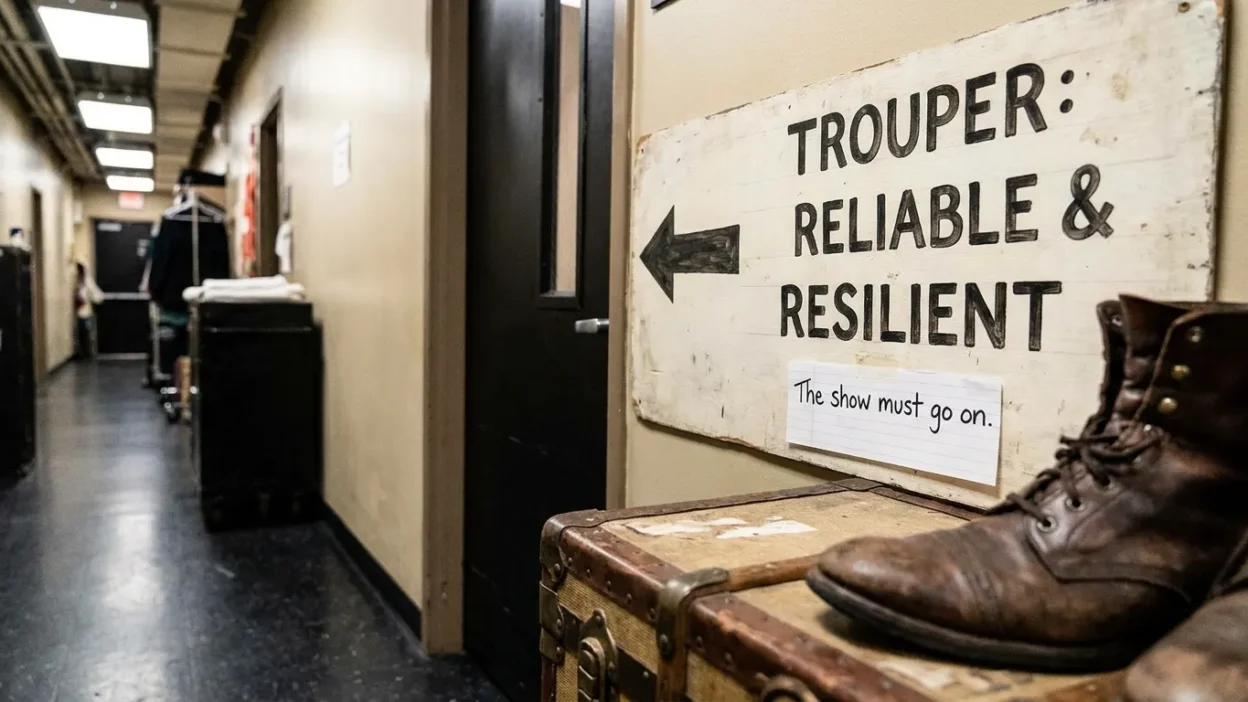
This is why the phrase “the show must go on” fits the word so well.
A performer may face problems but still walk onto the stage and do the job. The word then became useful for describing anyone with that same steady attitude.
How to Use Trouper in a Sentence
The easiest way to use trouper is to focus on a person’s ability to keep going.
Here are some natural examples:
- “You have been a real trouper through all of this.”
- “She was a trouper and helped everyone clean up.”
- “The team was full of troupers after the difficult week.”
- “He took the bad news like a trouper.”
- “My grandmother is a real trouper when she travels.”
- “The young actors proved they were talented troupers.”
- “Despite the long delay, the passengers were troupers.”
- “She has always been a trouper at work.”
These sentences show an important point: trouper often appears after “a” or “real.”
Common phrases include:
- a real trouper
- such a trouper
- a true trouper
- a great trouper
- a seasoned trouper
Trouper Meaning in a Compliment
When someone calls you a trouper, they are usually saying something good about you.
The compliment may focus on your:
- Strength
- Patience
- Reliability
- Experience
- Courage
- Dedication
- Ability to handle pressure
- Willingness to help
For example, a manager might tell an employee:
“You have been a real trouper this week.”
The manager may not mean that the employee performed on a stage. Instead, the manager is praising the person’s effort and steady attitude.
This makes trouper useful in both personal and professional conversations.
Trouper Synonyms
The best synonym depends on the context.
If you mean a performer, useful alternatives include:
- Actor
- Performer
- Entertainer
- Actress
- Player
- Thespian
Merriam-Webster’s thesaurus lists several performer-related synonyms for trouper, including actor, performer, actress, and entertainer.
If you mean a person who handles difficulty well, you could use:
- Dependable person
- Reliable person
- Survivor
- Strong person
- Steady worker
- Dedicated worker
- Resilient person
These words are not perfect replacements in every sentence. Trouper has a special warm tone because it praises someone for staying with the task despite difficulty.
Is Trouper Always Positive?
Usually, yes.
Calling someone a trouper normally shows approval.
However, tone and context matter.
If someone says, “Well, aren’t you a trouper,” in a sarcastic tone, the meaning can change. The speaker may be teasing the person.
In normal writing and speech, though, a real trouper is a positive expression.
It often means:
“You handled a difficult situation well, and I respect that.”
Common Mistakes With Trouper
One common mistake is using trooper when you mean trouper.
For example, if you want to praise your friend for staying calm during a difficult day, you can write:
“She was a real trouper.”
If you write “She was a real trooper,” the sentence may still appear in everyday English, and many readers will understand your meaning. But trouper is the spelling that directly matches the traditional “performer who persists” origin.
Another mistake is thinking that a trouper must be an actor.
That is not true.
The word has a wider figurative meaning. A teacher, parent, nurse, employee, traveler, athlete, or friend can all be called a trouper when they show the right qualities.
Common Mistakes vs. Correct Usage
| Common mistake | Better understanding |
| “A trouper only means an actor.” | It can also mean a dependable person who persists through hardship. |
| “Trouper and trooper always mean the same thing.” | They are different words with different origins and common meanings. |
| “Calling someone a trouper is negative.” | It is normally a compliment. |
| “A trouper must be a professional performer.” | The figurative meaning applies to many kinds of people. |
| “Trouper means someone who never struggles.” | It means someone who keeps going despite difficulty. |
When Should You Use Trouper?
Use trouper when you want to praise someone for being dependable, experienced, or strong during a difficult situation.
It works well in casual conversation.
For example:
At work:
“Jason was a real trouper and stayed late to help.”
With family:
“Mom was a trouper during the long road trip.”
After a difficult event:
“You have been such a trouper through all of this.”
In theater:
“She was an experienced trouper with years of stage work.”
The word feels warm and personal. It is often more expressive than simply saying reliable.
When Should You Avoid Trouper?
Avoid the word when you need a very formal or exact term.
For example, in a formal report, experienced performer, reliable employee, or resilient worker may be clearer.
You should also avoid using trouper when you actually mean a military or police trooper.
Context matters.
If a sentence discusses patrol cars, state police, soldiers, cavalry, or military service, trooper is usually the correct word.
If the sentence discusses actors, performers, or someone who keeps going through hardship, trouper may be the better choice.
Quick Reference for Trouper Meaning
| Question | Quick answer |
| What does trouper mean? | An experienced performer or a dependable person who persists through difficulty. |
| Is trouper a compliment? | Usually, yes. |
| What does a real trouper mean? | Someone reliable who handles problems without giving up. |
| Is trouper the same as trooper? | No. They have different origins and common meanings. |
| What is the origin of trouper? | It comes from troupe plus the suffix -er. |
| Can trouper describe a non-actor? | Yes. The figurative meaning applies to many people. |
| What is a simple synonym? | Reliable, dependable, performer, or resilient person, depending on context. |
Why the Word Still Matters
You may not hear trouper every day, but it remains useful because English often needs words that describe character.
Words such as reliable, strong, and dedicated tell us what a person is like.
Trouper adds another idea: the person keeps going when things get hard.
That is why the word can feel more personal than a simple dictionary synonym.
It recognizes effort.
It also connects modern speech to the world of live performance, where people often had to continue despite tiredness, mistakes, travel, or other problems.
Final Tips for Remembering Trouper
Here is the easiest way to remember the word:
Trouper → troupe → performer.
Then remember the wider meaning:
A trouper is someone who keeps going.
So, if your friend works through a hard day, helps others, or stays calm during a stressful event, you can say:
“You are a real trouper.”
Just remember that trooper is the usual spelling for a soldier or police officer.
Once you connect trouper with troupe, the spelling and meaning become much easier to remember.
FAQs:
1. What is the simple trouper meaning?
The simple trouper meaning is an experienced or dependable person who keeps going during a difficult situation. It can also mean a member of a theatrical group, especially an actor.
2. What does “a real trouper” mean?
A real trouper means someone who stays strong, reliable, and helpful when things become difficult. It is normally a compliment.
3. Is a trouper an actor?
A trouper can be an actor or another performer, especially in the traditional sense. But modern English also uses the word for a dependable person who handles hardship well.
4. What is the difference between trouper and trooper?
Trouper comes from troupe and relates to performers or people who persist through difficulty. Trooper commonly refers to a soldier or police officer. The two words sound alike in American English, which causes confusion.
5. Is calling someone a trouper a good thing?
Yes. In most situations, calling someone a trouper is positive. It praises the person’s strength, dependability, experience, or ability to keep going.
6. What are some synonyms for trouper?
Depending on the meaning, synonyms include performer, actor, entertainer, reliable person, dependable person, dedicated worker, and resilient person. The best choice depends on the sentence.
7. How can I use trouper in a sentence?
You can say, “She was a real trouper during the difficult trip.” Here, trouper means that she stayed dependable and handled the difficult situation well.
Conclusion:
The trouper meaning is easier to understand when you remember its connection to troupe. Traditionally, a trouper was a member of a performing group. Today, the word can also describe someone who stays dependable and keeps going during hard times. It is usually a warm compliment.
The most important spelling point is trouper vs. trooper. Use trouper for the performer or resilient-person meaning, while trooper commonly refers to a soldier or police officer. When you see “a real trouper,” think of someone who stays steady when the going gets tough. That simple idea will help you use the word naturally and correctly.

I’m Jessica Morgan, a writer who loves covering lifestyle, entertainment, sports, trends, and everyday topics in a simple and engaging way. At PrayersVibe.com, I focus on creating helpful, easy-to-read content that informs and connects with readers. I enjoy researching new ideas and turning them into clear, useful stories that readers can enjoy.